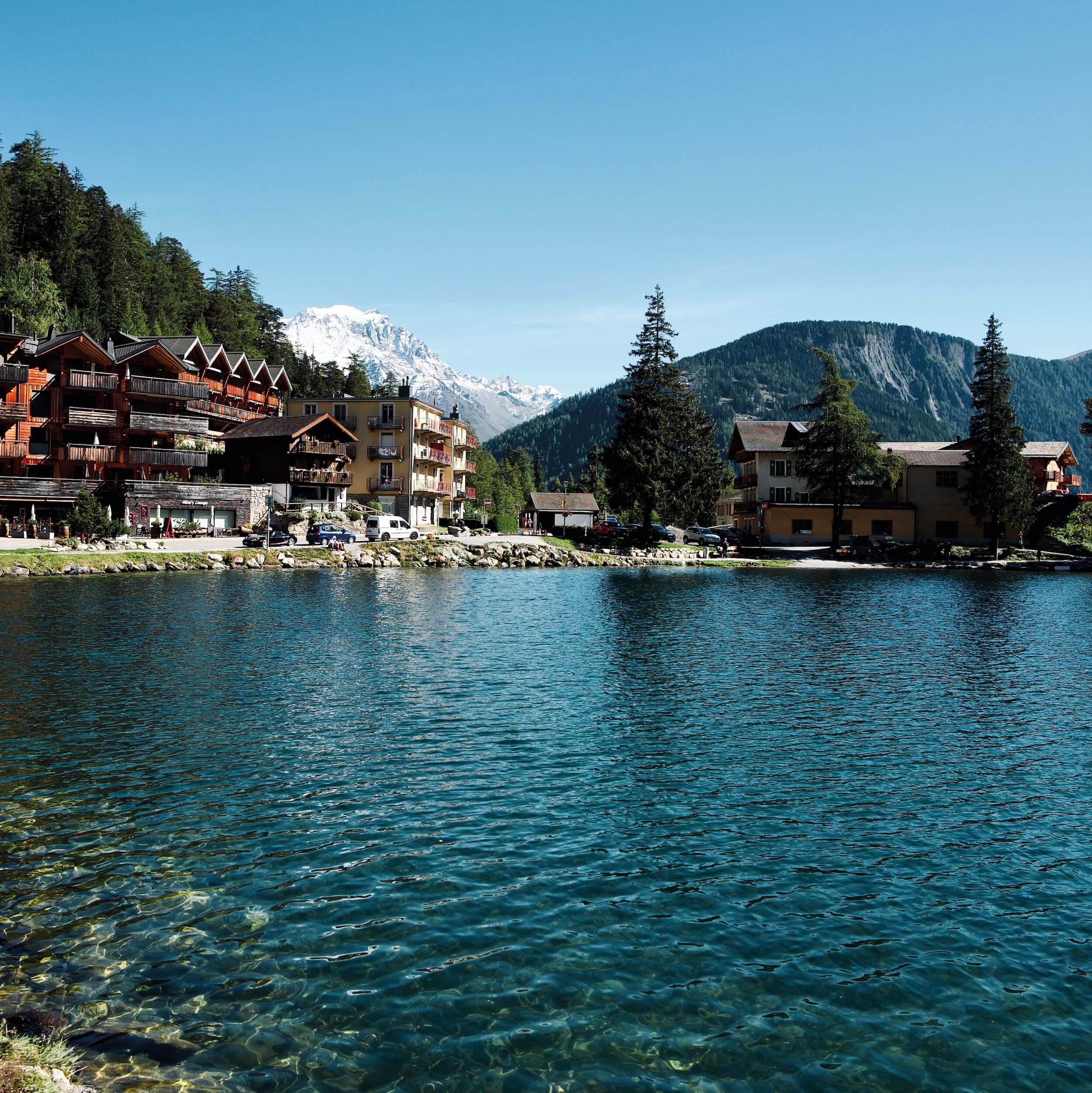
Nestled at an altitude of 1,470 metres in the Swiss canton of Valais, Champex Lac is one of the Alps' most tranquil mountain destinations. Often referred to as the 'Little Canada of Switzerland', the village sits on the shores of the emerald coloured Lac de Champex, surrounded by dense forests and the peaks of the Mont Blanc massif. Despite its growing popularity, it has retained the peaceful atmosphere of a traditional alpine village.
The lake is the centrepiece of Champex. A gentle walking trail circles its shoreline, taking around an hour to complete and offering constantly changing views across the water. In summer the lake becomes a popular spot for rowing, paddle boarding and fishing, while its grassy shores provide an ideal place to relax. During winter, the frozen landscape transforms into a quiet snow covered retreat.
Champex Lac is also one of the best known stopping points on the Tour du Mont Blanc, one of Europe's classic long distance hiking trails. Every summer thousands of walkers pass through the village as they make their way around the Mont Blanc massif. The village is equally familiar to runners competing in the Ultra Trail du Mont Blanc, one of the world's most prestigious ultramarathons, where Champex serves as a major checkpoint.
For visitors looking to explore beyond the lake, the Flore-Alpe Alpine Botanical Garden showcases more than 4,000 species of alpine plants from mountain ranges across the world. Open during the warmer months, it provides an opportunity to discover the remarkable diversity of high altitude flora in carefully landscaped gardens overlooking the surrounding mountains.
Less obvious is Champex's military history. Hidden beneath the mountainside is the former Fort d'Artillerie de Champex, part of Switzerland's extensive network of defensive fortifications developed during the Second World War under the National Redoubt strategy. Constructed in 1940, the underground complex contains around 600 metres of tunnels, accommodation, kitchens, medical facilities and artillery positions designed to house up to 300 soldiers. The fort remained operational throughout the Cold War, when it was upgraded to withstand the threat of nuclear conflict, before finally being decommissioned in 1998. Today it is open to visitors on guided tours during the main tourist season.
Just below Champex lies another natural attraction, the Gorges du Durnand. Here a series of wooden walkways and almost 600 steps follow the dramatic Durnand stream through a narrow gorge, passing a succession of waterfalls and cascades. The route provides one of the most spectacular short walks in the region and offers a striking contrast to the calm waters of the lake above.