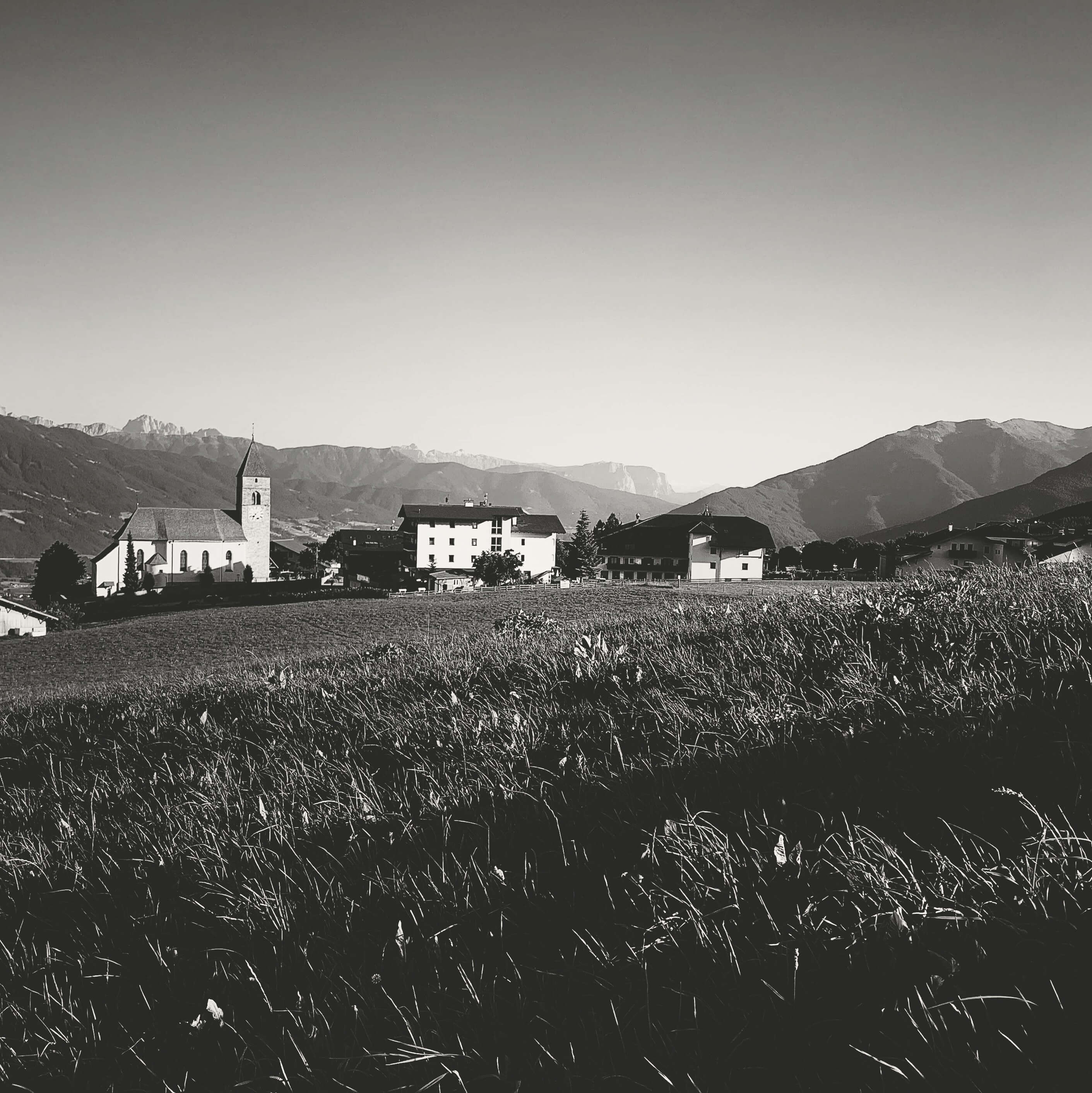
The Dolomites are among the most recognisable mountains in Europe. Rising above the valleys of northern Italy, their pale cliffs and towers create a landscape that appears almost unreal, particularly at sunrise and sunset when the rock faces glow pink and orange in a phenomenon known as enrosadira. The heart of the Dolomites lies in South Tyrol, where pale rock walls rise above vineyards, forests and alpine meadows, before spreading south and east across Trentino and Belluno.
Unlike the granite peaks found elsewhere in the Alps, the Dolomites are built from a distinctive carbonate rock known as dolomite. Around 250 million years ago this part of Europe lay beneath a warm tropical sea where coral reefs and marine sediments accumulated over millions of years. Tectonic forces later lifted these ancient seabeds thousands of metres into the air. The result is a landscape of sheer walls, isolated towers and vast limestone plateaus unlike anywhere else in the Alpine arc. The geological significance of the region was recognised in 2009 when the Dolomites were designated a UNESCO World Heritage Site.
The rise of destination tourism and social media have transformed the once-quiet mountain valleys into some of the busiest areas in the Alps. Famous locations such as Seceda, Lago di Braies and the Tre Cime are frequently crowded during the summer season, while traffic congestion has become a recurring issue on some mountain roads. Local authorities have responded with visitor limits, shuttle services and other measures designed to protect the landscape while managing growing visitor numbers.
Beyond the most photographed viewpoints, the Dolomites remain a region of remarkable cultural and natural diversity. German, Italian and Ladin traditions coexist across the valleys, and small farming communities continue to shape the landscape, while traces of the First World War can still be found high in the mountains where Italian and Austro-Hungarian forces fought along the front line.
The Dolomites are a geological record of an ancient tropical sea, a cultural crossroads between northern and southern Europe, and one of the most distinctive mountain landscapes in the world. Whether viewed from a crowded summit trail or a quiet pasture above a remote valley, the pale mountains continue to justify their reputation as one of the Alps' great natural wonders.