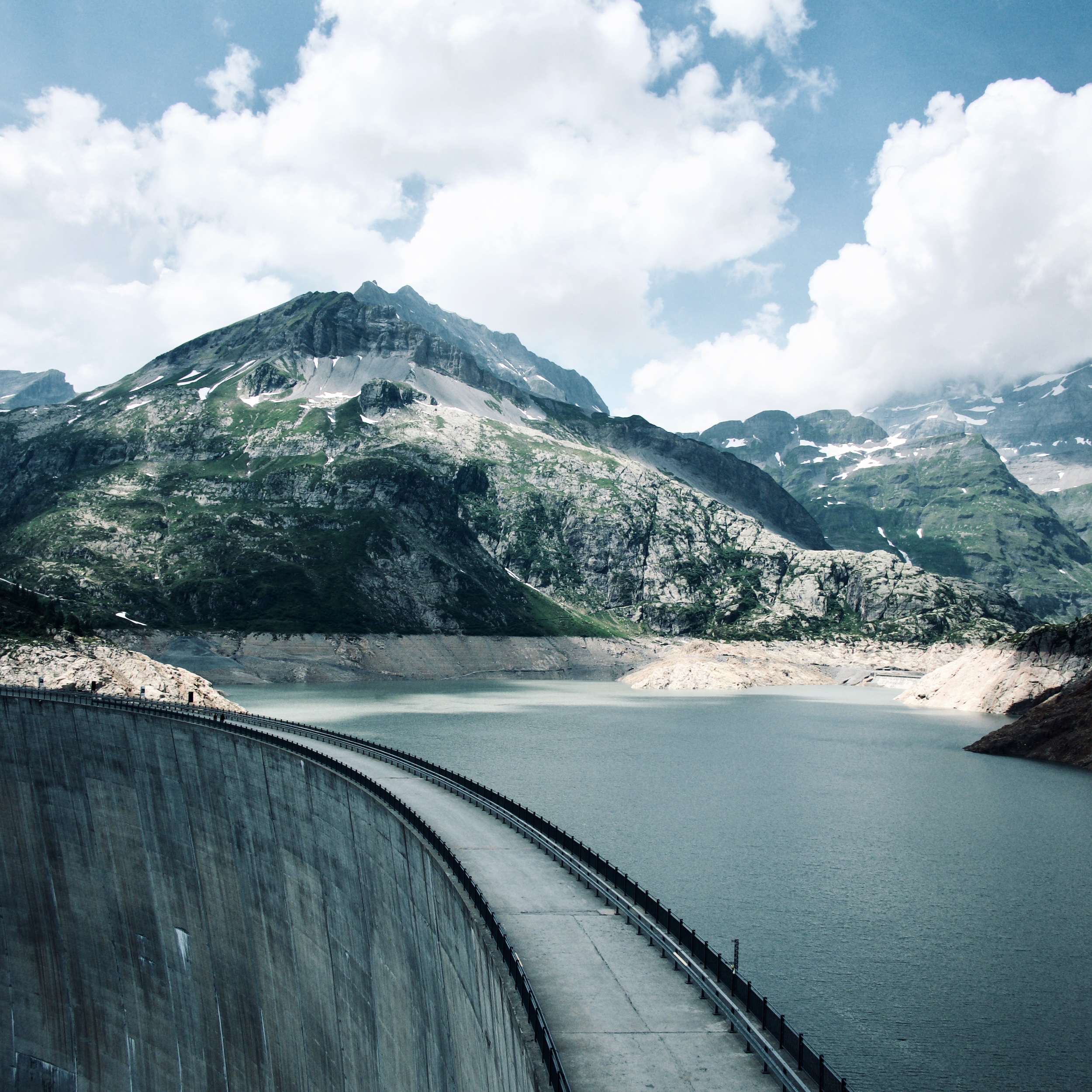
From Châtelard-Frontière the Col de la Gueulaz climbs steeply upwards for 11 kilometres from Finhaut to the dam, mostly on a single carriageway. The hairpin bends are generally the place to make way for the PostBus and large lorries working at the dam. If you don’t want to drive up, a funicular and panoramic train run from Châtelard to the dam.
Émosson, an immense, 180-metre-high dam perched above the valley floor, was brought into service in 1972 to satisfy a high demand for electricity from the French-speaking part of Switzerland. Électricité d’Émosson SA, a Franco-Swiss development, was created in 1954 to build the dam, and it not only constructed the dam in eight years but also moved the border to the Swiss side, preventing it from running through the dam. The dam takes water from the Argentière, Tour and Lognan glaciers, mainly by subglacial water intakes. It also takes water from the French valleys of Bérard and La Fouly.
At the top of the Col (1,965 metres) there are a couple of car parks, and construction and maintenance work is often being carried out. The obligatory small collection of shops and cafes sit above the dam and the summit station of the funicular. Émosson is a great place for an easy hike and is well known for its dinosaurs – well, their footprints, anyway.
The footprints discovered in 1976 at Vieux Émosson (Old Émosson) date back more than 240 million years. Further tracks have been found since then, and it is now thought the tracks were left by primitive reptiles – sort of upright crocodiles – belonging to the Archosaurian groups, pre-dating dinosaurs. The tracks are a 2.5-hour hike from the dam at a height of 2,500 metres. Each summer, for three weeks from the end of July, a guide is on site for tours.