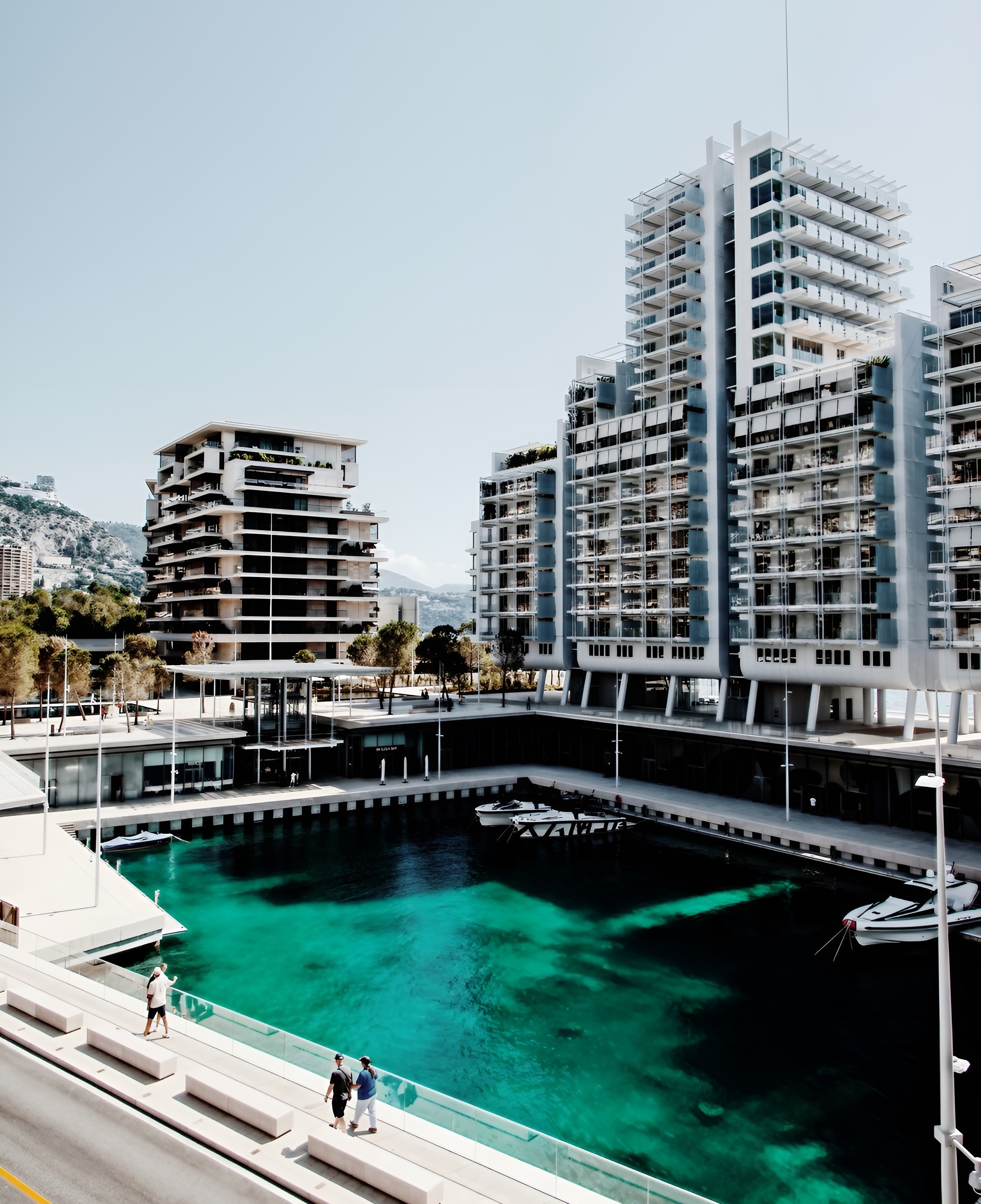
Mareterra, a groundbreaking project in Monaco, was inaugurated by Prince Albert II on the 5th of December 2024 and features buildings and spaces by world-renowned architects such as Renzo Piano, Lord Norman Foster, Stefano Boeri, and Tadao Ando. This €2 billion development introduces over 130 super-prime residences and expands Monaco's territory by 3% through an ambitious marine land reclamation effort.
The project, spearheaded by a conglomerate of five Monaco-based families including Patrice Pastor, represents a significant feat of planning and engineering. Pastor, a prominent real estate developer and philanthropist, hails from one of Monaco’s influential dynasties. His portfolio includes several high-profile developments that have reshaped the Monegasque skyline.
Mareterra joins a select group of global urban extensions built on reclaimed land – from the West Kowloon Cultural District in Hong Kong to the Hammarby Sjöstad project in Stockholm. Yet, it stands apart in its commitment to climate adaptation and low-carbon urbanism. As sea levels rise and cities reevaluate their coastlines, Mareterra proposes a model for combining resilience, ecology, and high-end design.
This new district includes Monaco's largest green public space, a marina, retail and dining outlets, and a new coastal promenade that extends the contemporary spirit of the Larvotto Beach redevelopment. The layout is car-free, supported by underground logistics routes and electric mobility hubs that reinforce Monaco’s 2050 carbon neutrality goal. Heating and cooling systems are powered by seawater heat exchange, supplying 80% of energy needs from renewable sources. Electric charging points for vehicles and bicycles are distributed throughout the site.
I think it’s thrilling; the idea of having a neighbourhood, with all its public spaces, its own richness and interest, in addition to the fact it is tucked within this nature. It’s kind of what we dream about doing everywhere.MICHEL DESVIGNE
Renzo Piano’s landmark contribution to the development is Le Renzo, a striking 126-metre, 17-storey building resembling a ship. It houses 50 spacious residences, including a quadruplex penthouse. Elevated one level above the ground, the building ‘levitates’ above the landscape, framing panoramic sea views and stunning sunsets. At its bow, a residents’ sea-water pool cantilevers out over the sea, resting 2.25 metres above sea level, a symbolic and literal intersection of land and ocean.
The masterplan, developed by Valode & Pistre Architectes, includes five apartment buildings, ten villas, and four townhouses, arranged across a flowing, pedestrian-friendly landscape. The development exemplifies biophilic urbanism, integrating green roofs, garden terraces, and an extensive planting strategy designed by Michel Desvigne Paysagiste. Over 1,000 mature trees, including Aleppo and Umbrella pines, and other Mediterranean species enhance biodiversity and help combat the urban heat island effect.
While sustainability is a guiding principle, so is connectivity. The district offers new links to cultural landmarks like the Grimaldi Forum and the Japanese Garden. A 1.5-kilometre extension of the Renzo Piano-designed Larvotto Beach promenade now connects Mareterra to Port Hercule, creating a continuous coastal path along the city’s edge.
An Alexander Calder sculpture, originally purchased by Prince Rainier and Princess Grace in 1966, will serve as a centrepiece in one of Mareterra’s public courtyards. The artwork nods to Monaco’s legacy of public art, set within a district shaped by some of the most respected architectural names of the 21st century.
As with much of Monaco’s ultra-luxury real estate, Mareterra invites reflection on long-term usage. While the apartments and villas represent the height of contemporary coastal living, it remains to be seen whether these homes will become vibrant, lived-in communities or part of the growing trend of "ghost urbanism”, investment properties that rarely see their owners.
Nevertheless, Mareterra could mark a turning point in how cities worldwide approach development in the face of ecological change. With its combination of climate resilience, urban greening, and high-end design, it offers a glimpse into what sustainable luxury could look like.
I wanted this new area to embody the excellence and conviviality which distinguish the Principality of Monaco so well. Mareterra will integrate perfectly with our shoreline, and in a few years will be seen as a natural extension of our territory.PRINCE ALBERT II OF MONACO