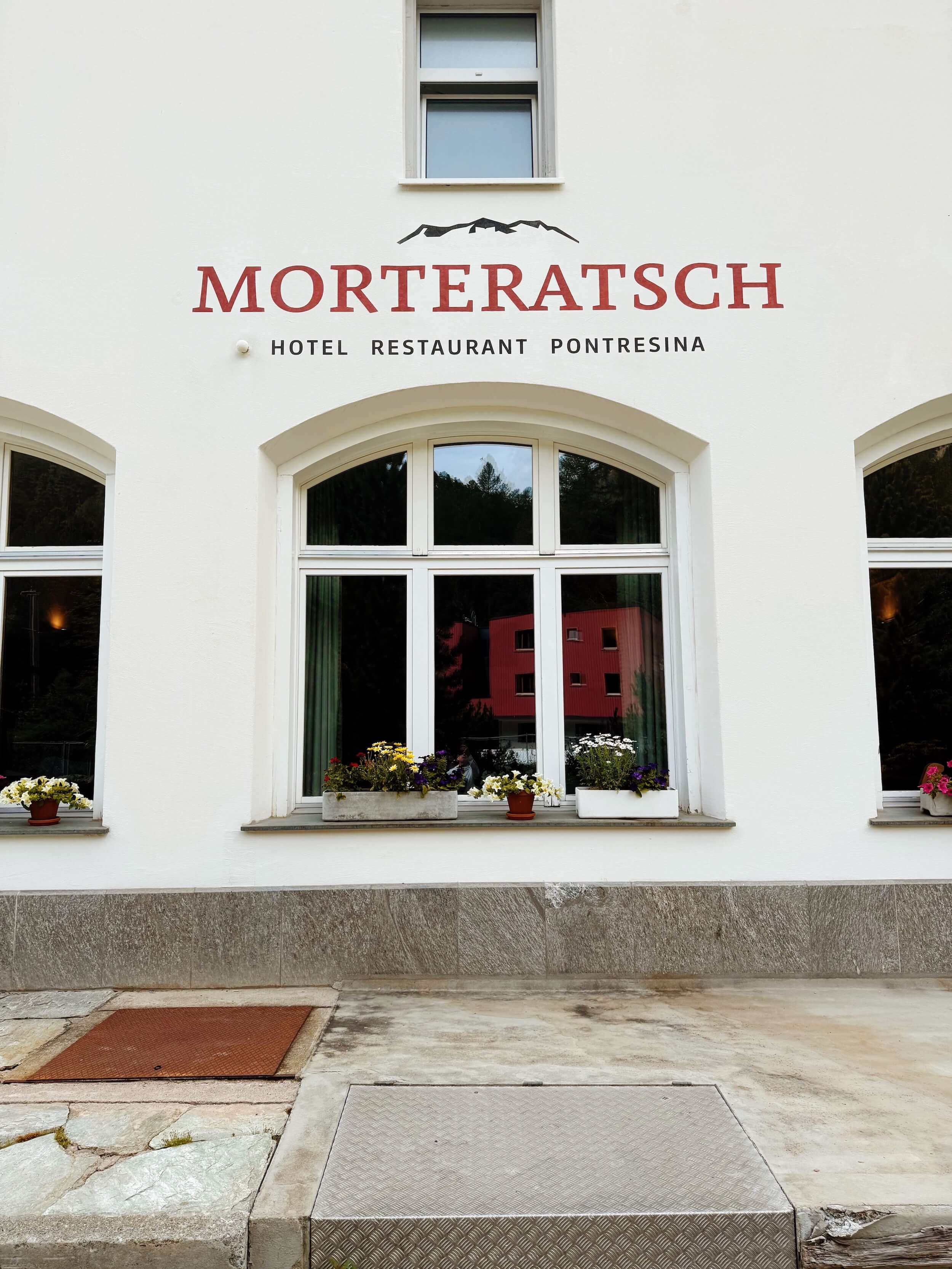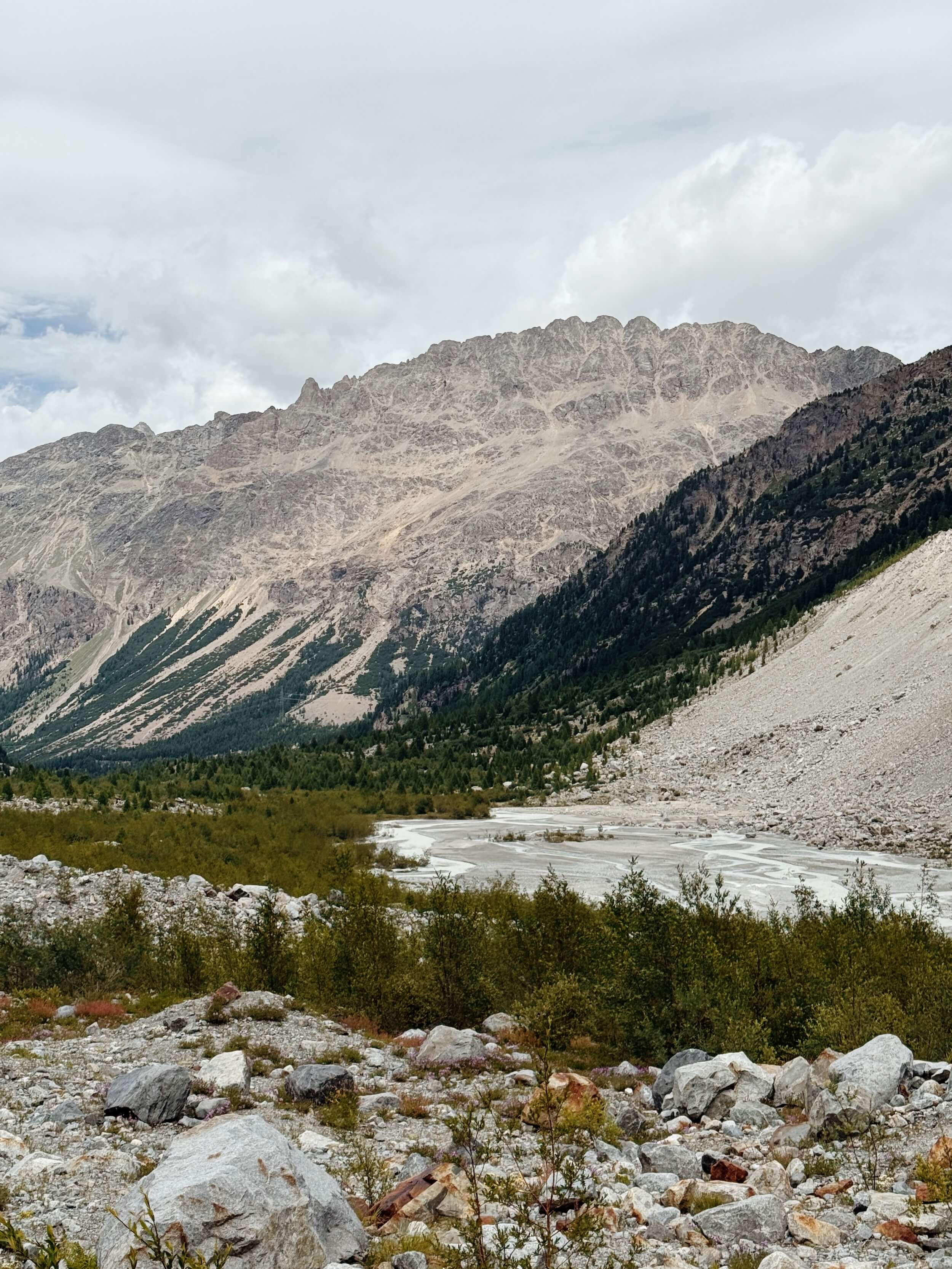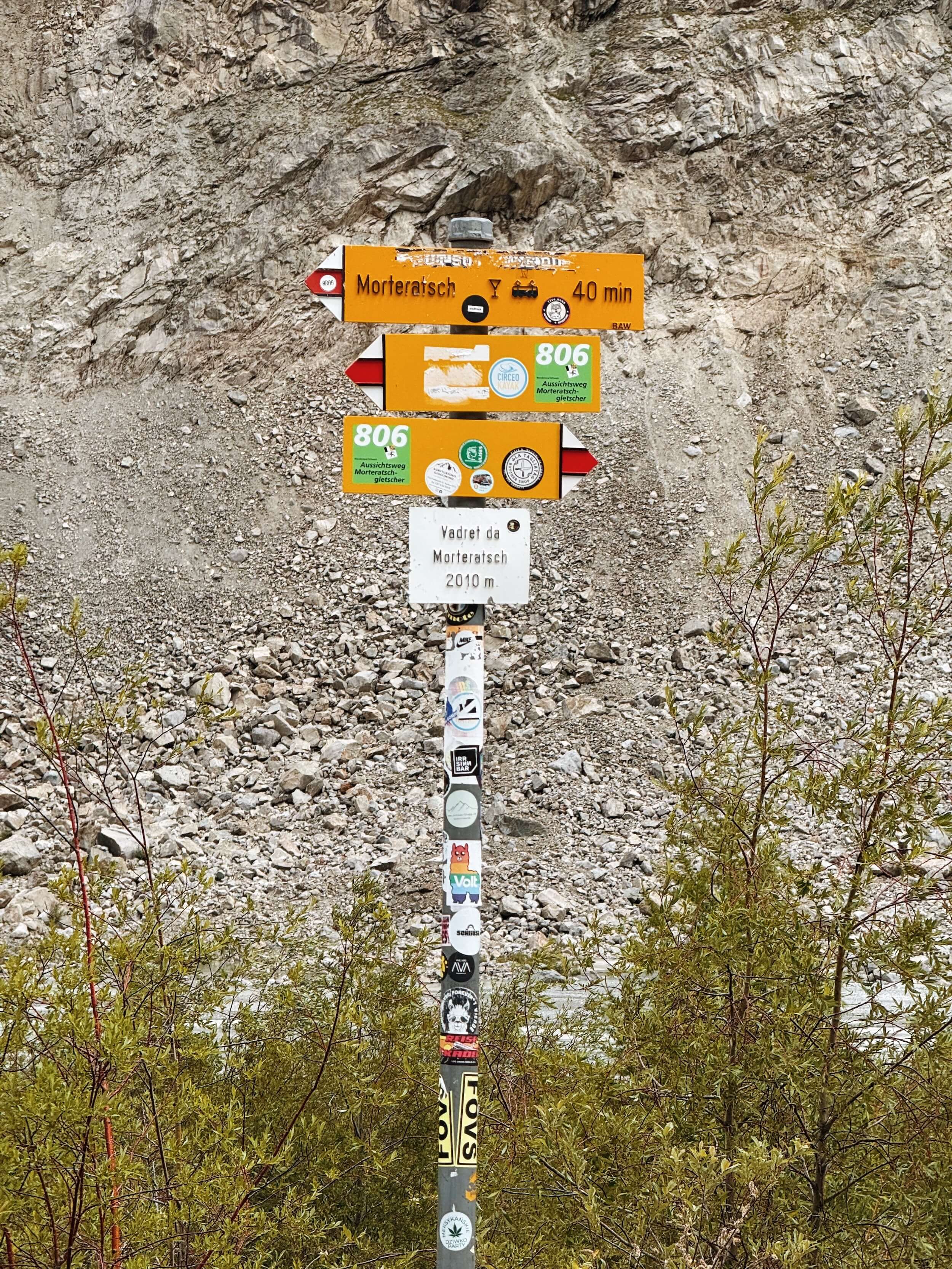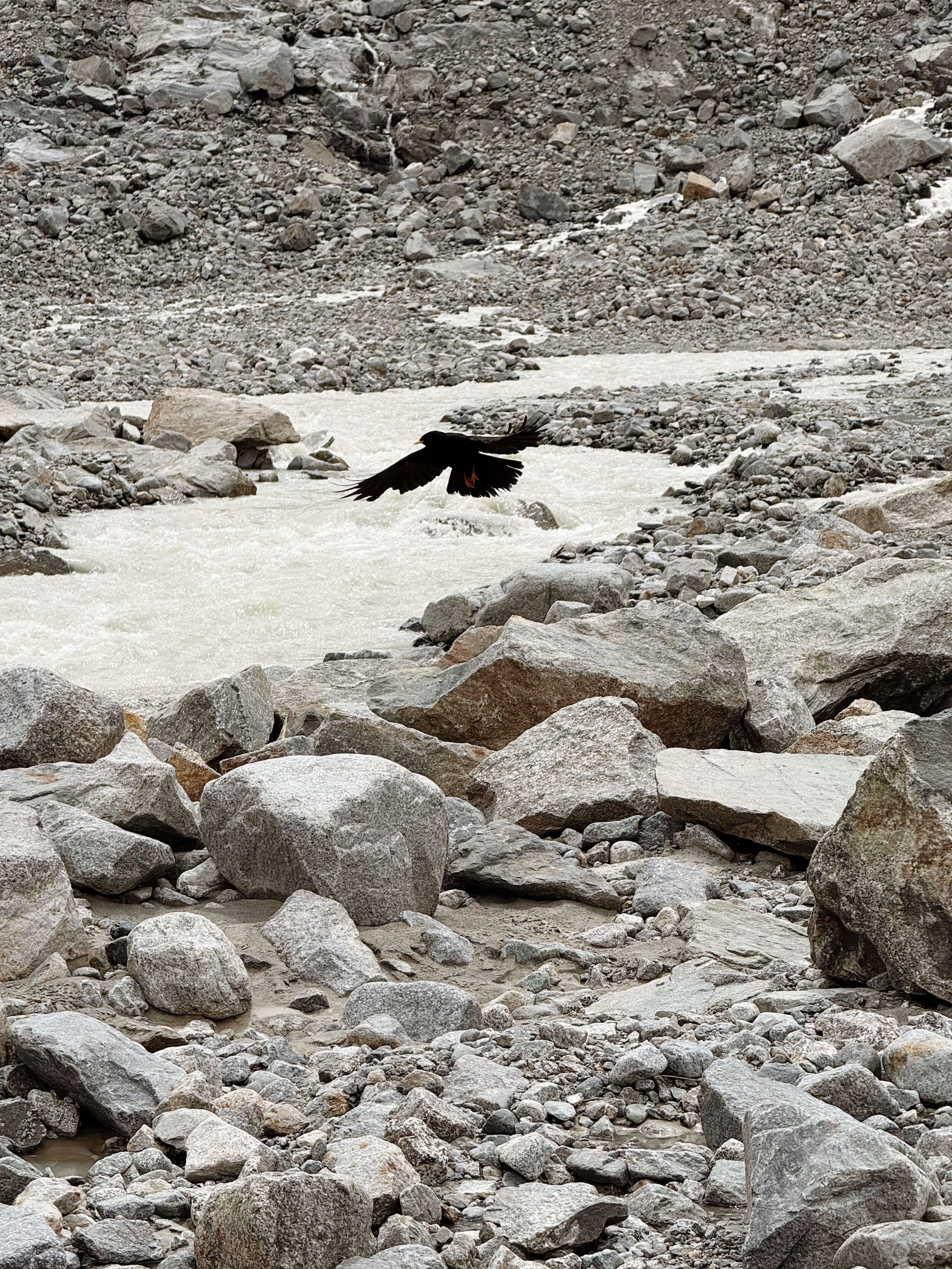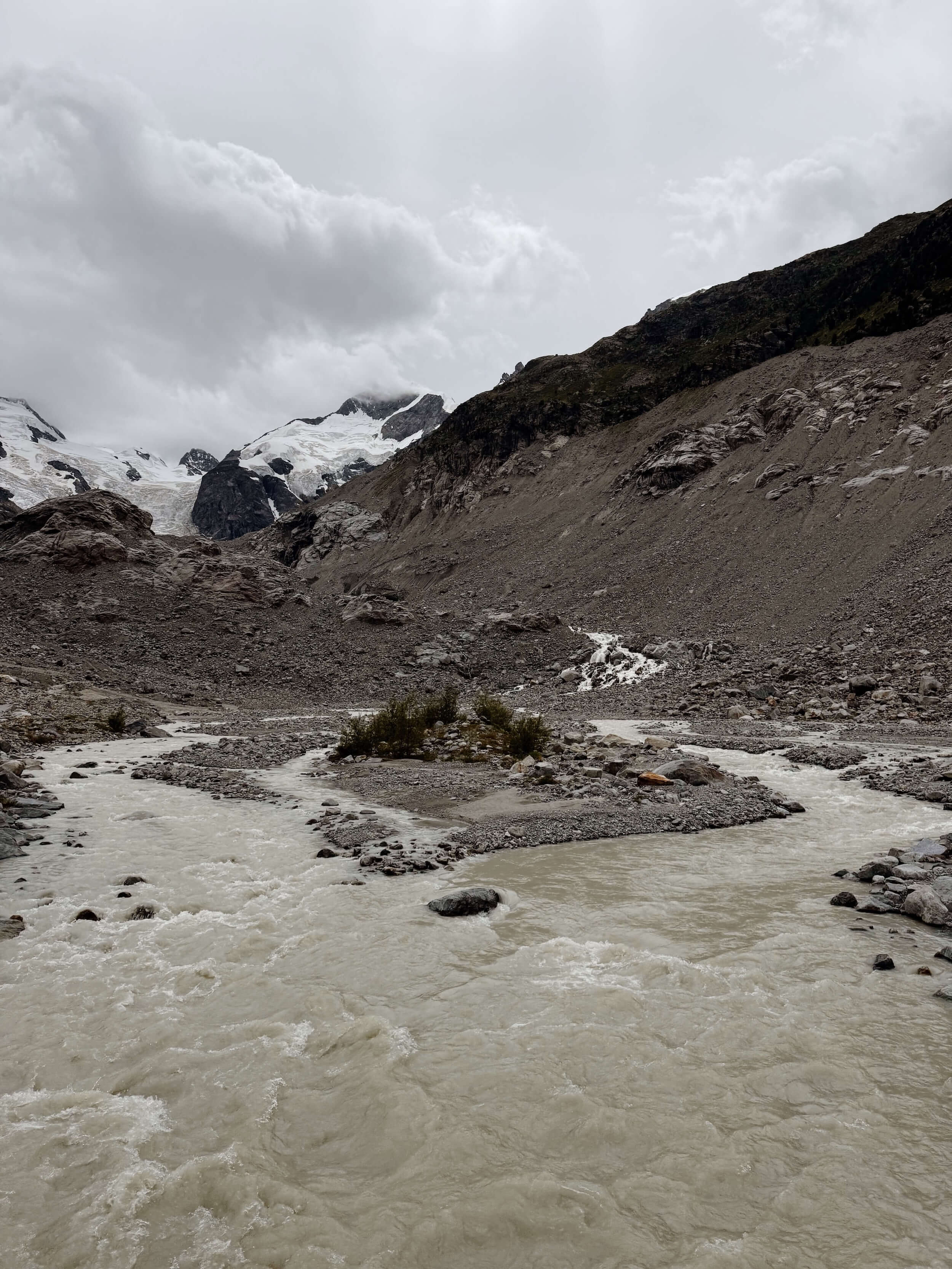
The walk to the Morteratsch Glacier begins after the Hotel Morteratsch, beyond the railway crossing where the trail follows the river upstream through a broad valley. The water, fed by the glacier's constant melt, rushes over smooth stones, carrying with it the unmistakable colour of glacial flour.
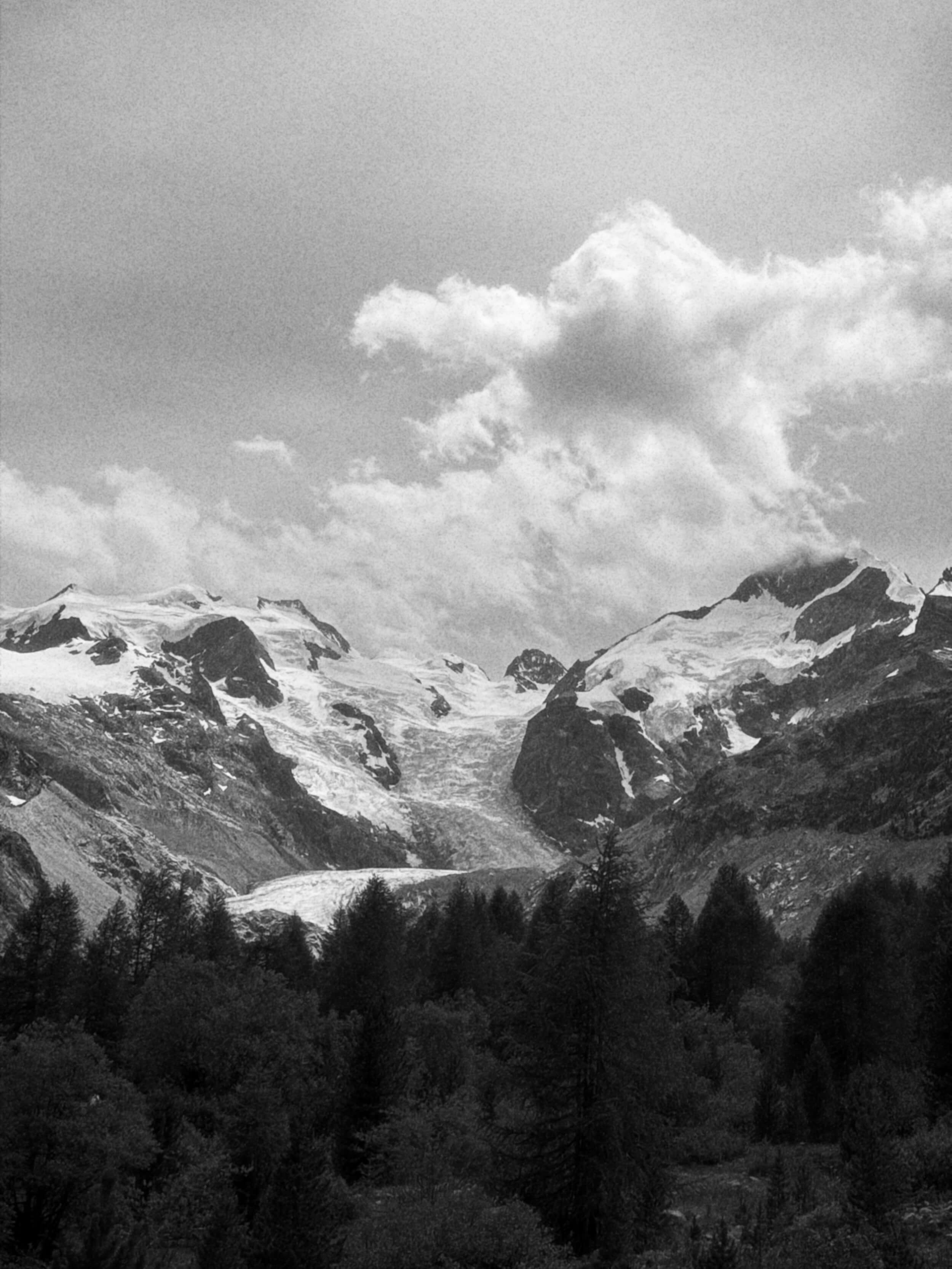
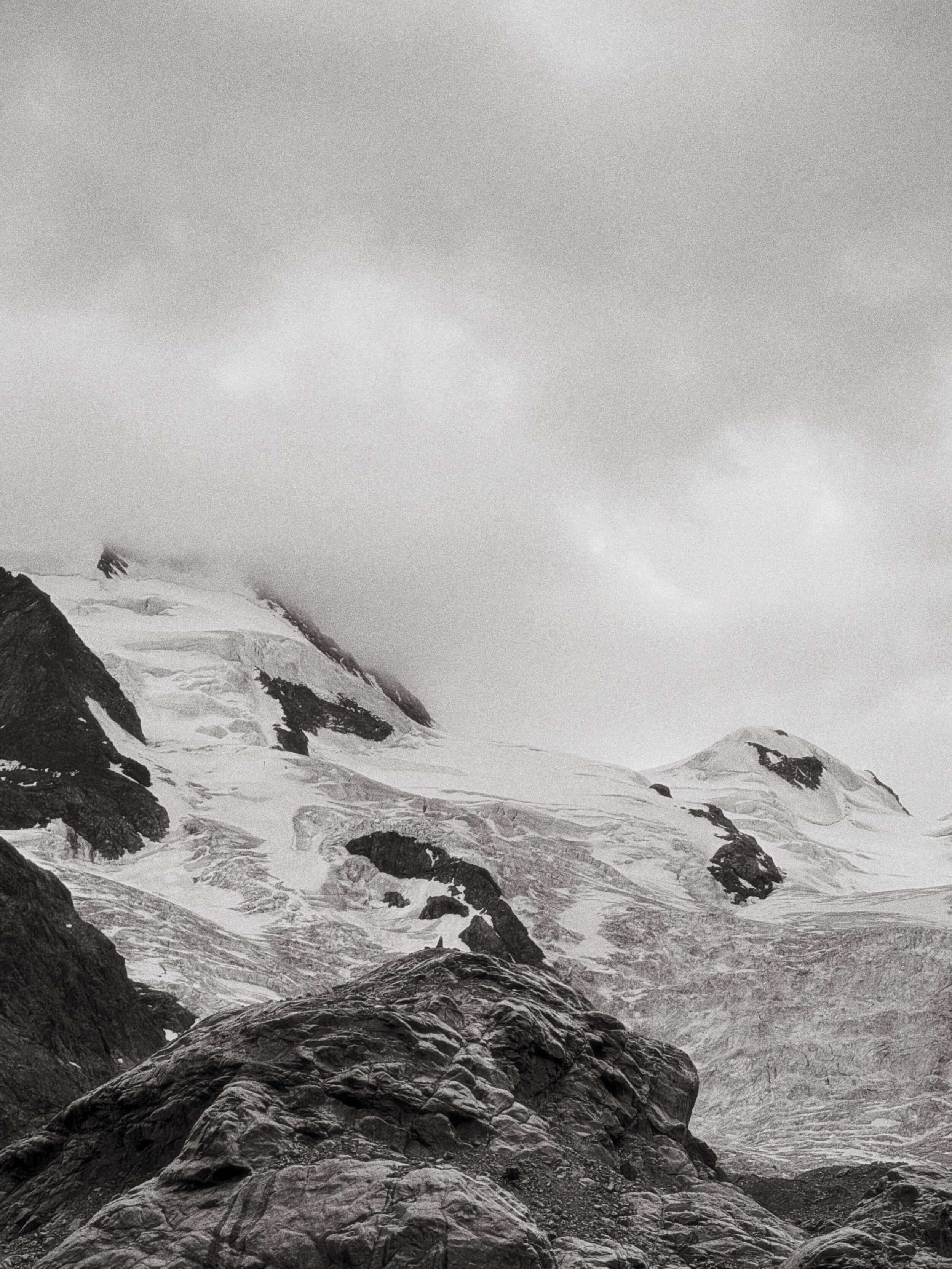
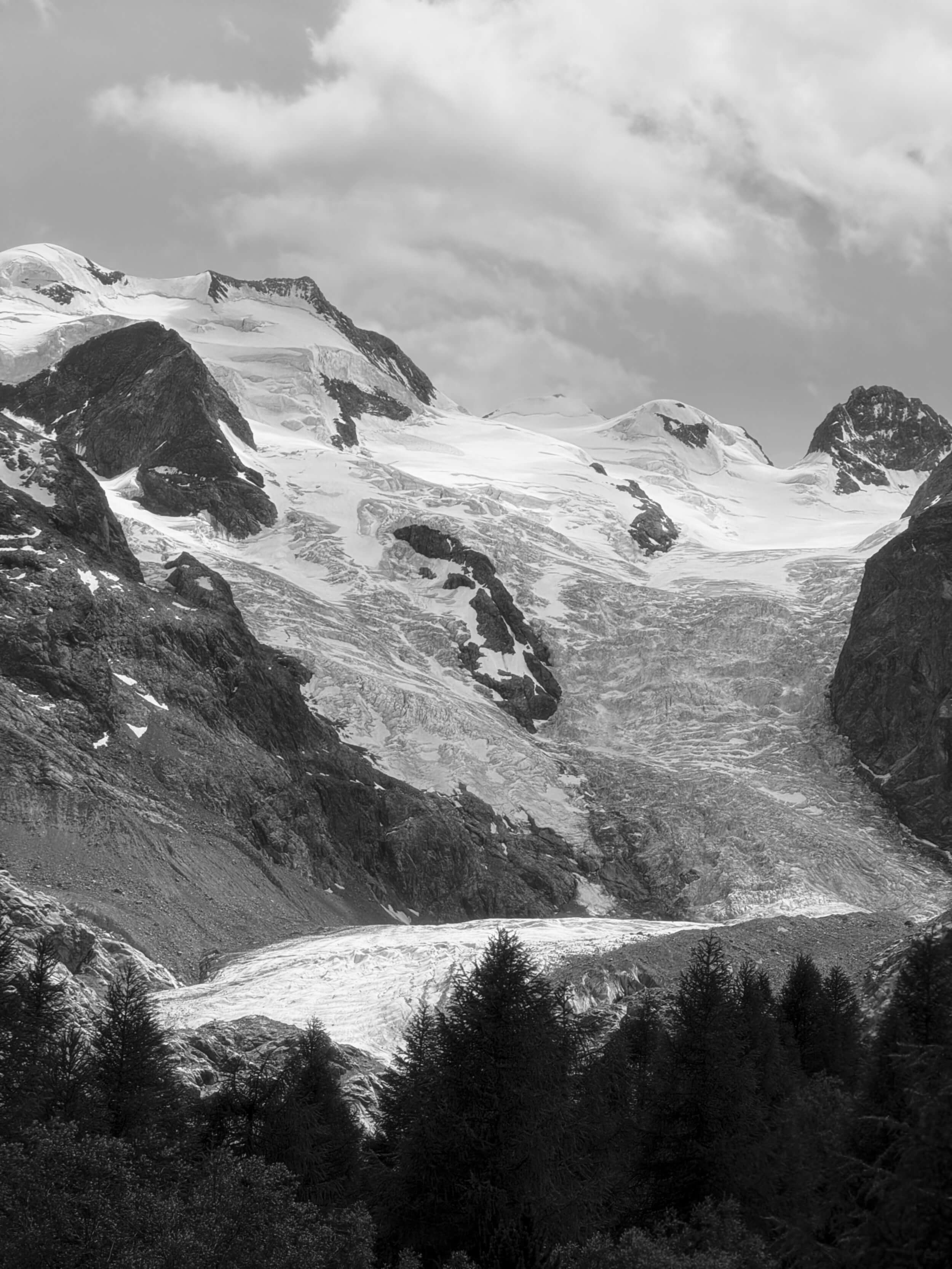
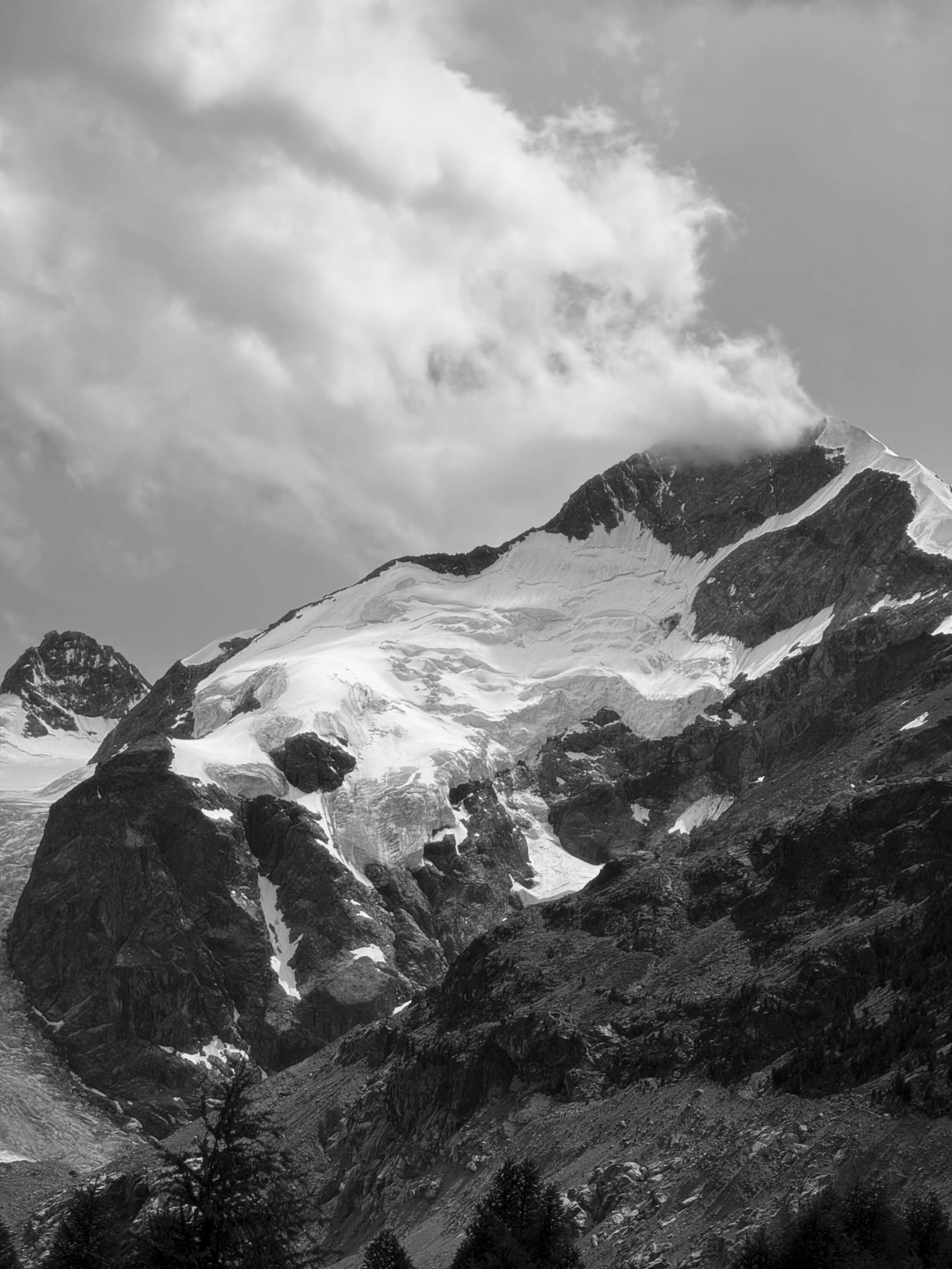
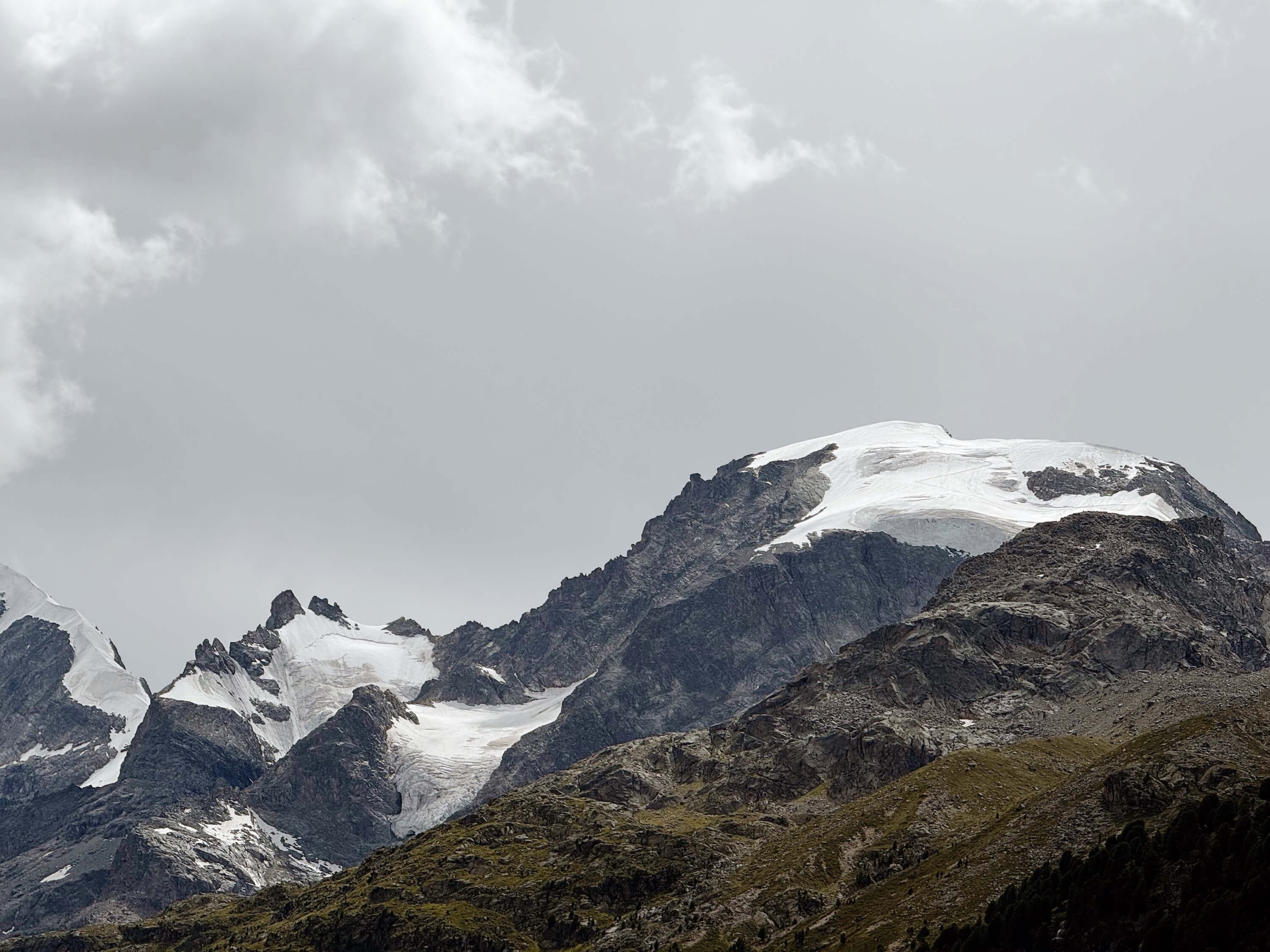
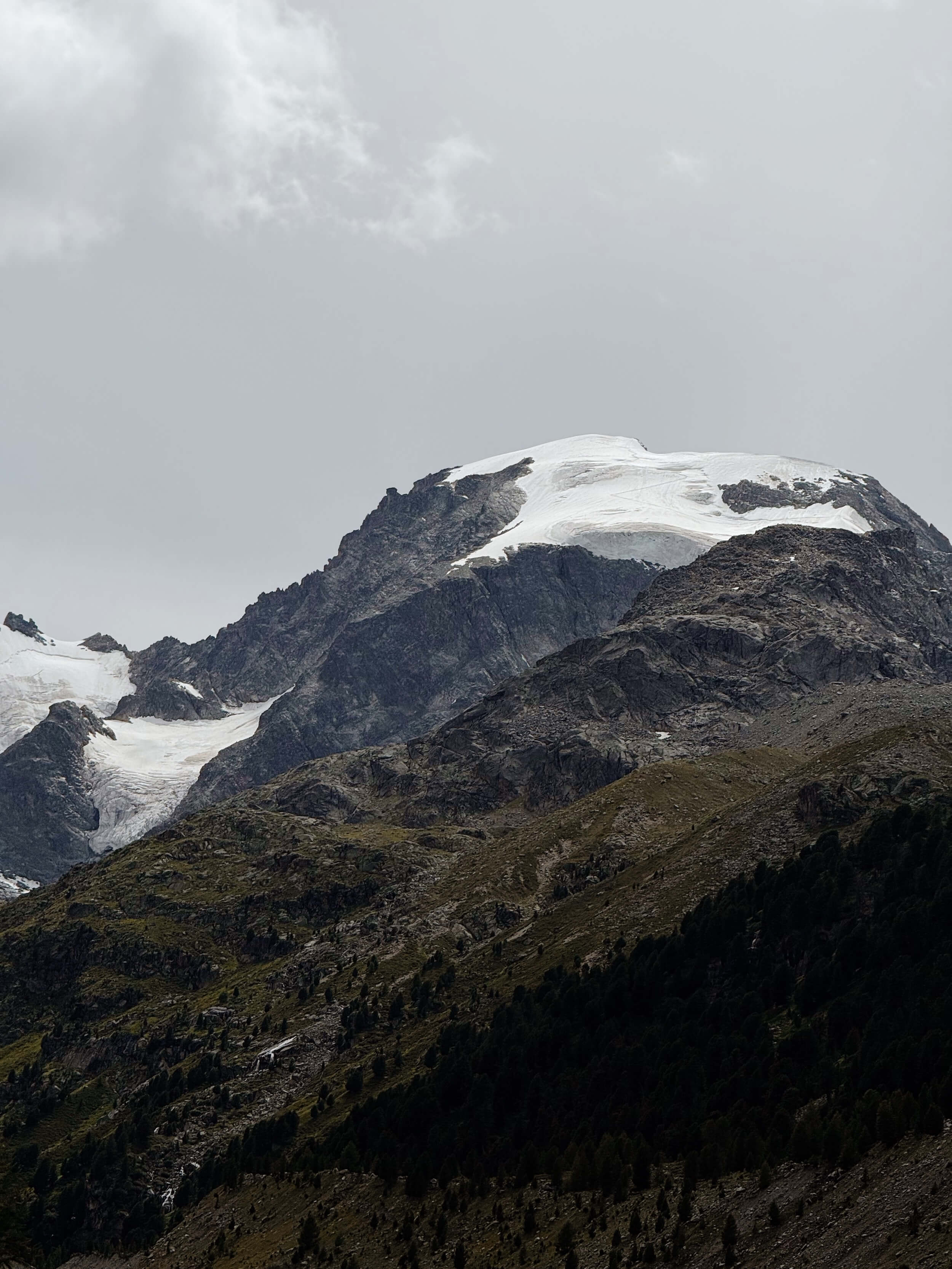
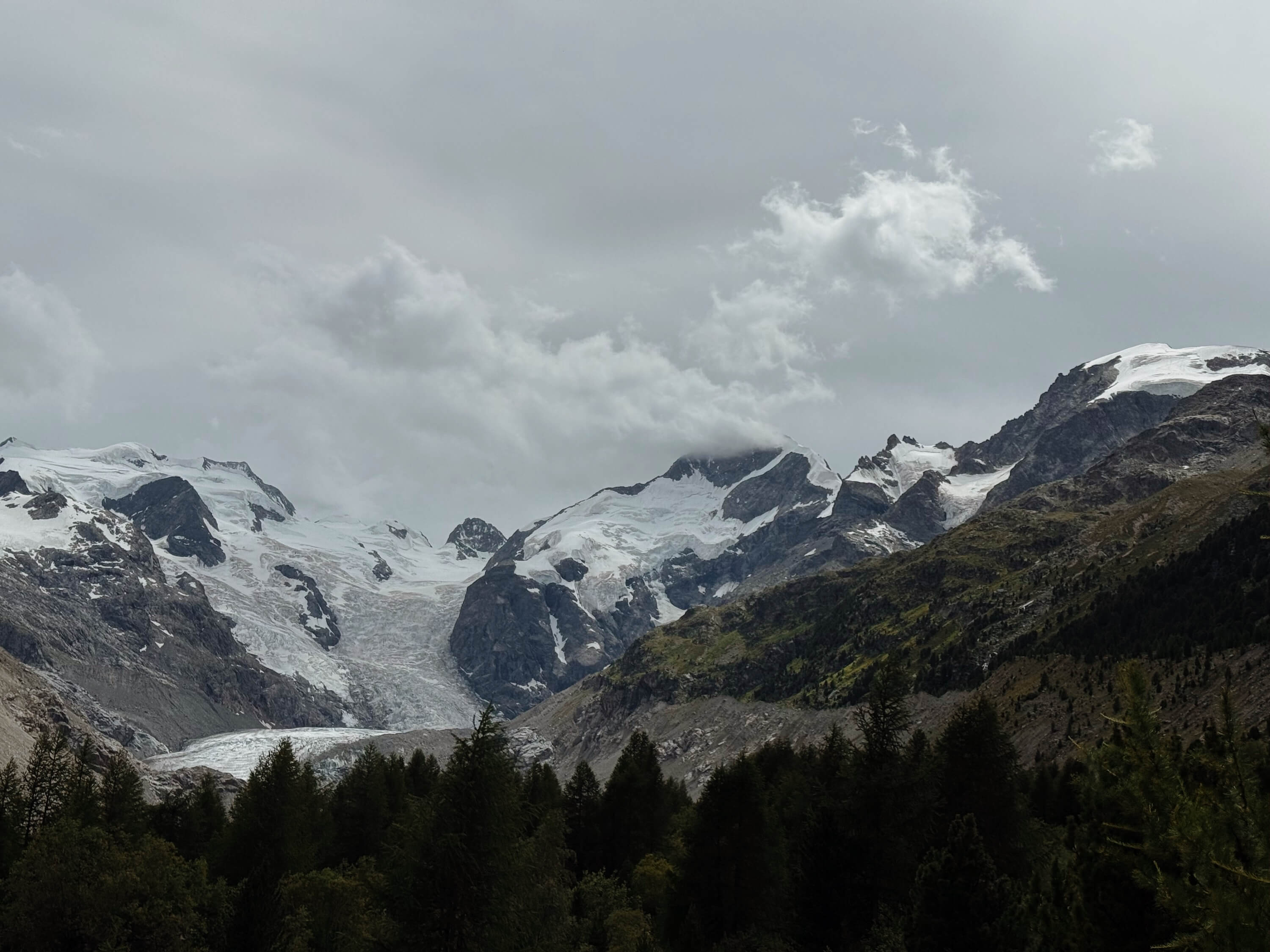
In the distance, the glacier appears reassuringly close. Its white surface hangs beneath the peaks of the Bernina Range, waiting at the end of the valley. It feels impossible that something so large could simply disappear.
It is about a 40 minute walk along a wide, impeccably maintained gravel trail. The gradient is gentle enough that the climb never feels demanding. The only interruption to the sound of the river is the quiet hum of electric bike tyres as they pass, before returning a short time later from the end of the valley.
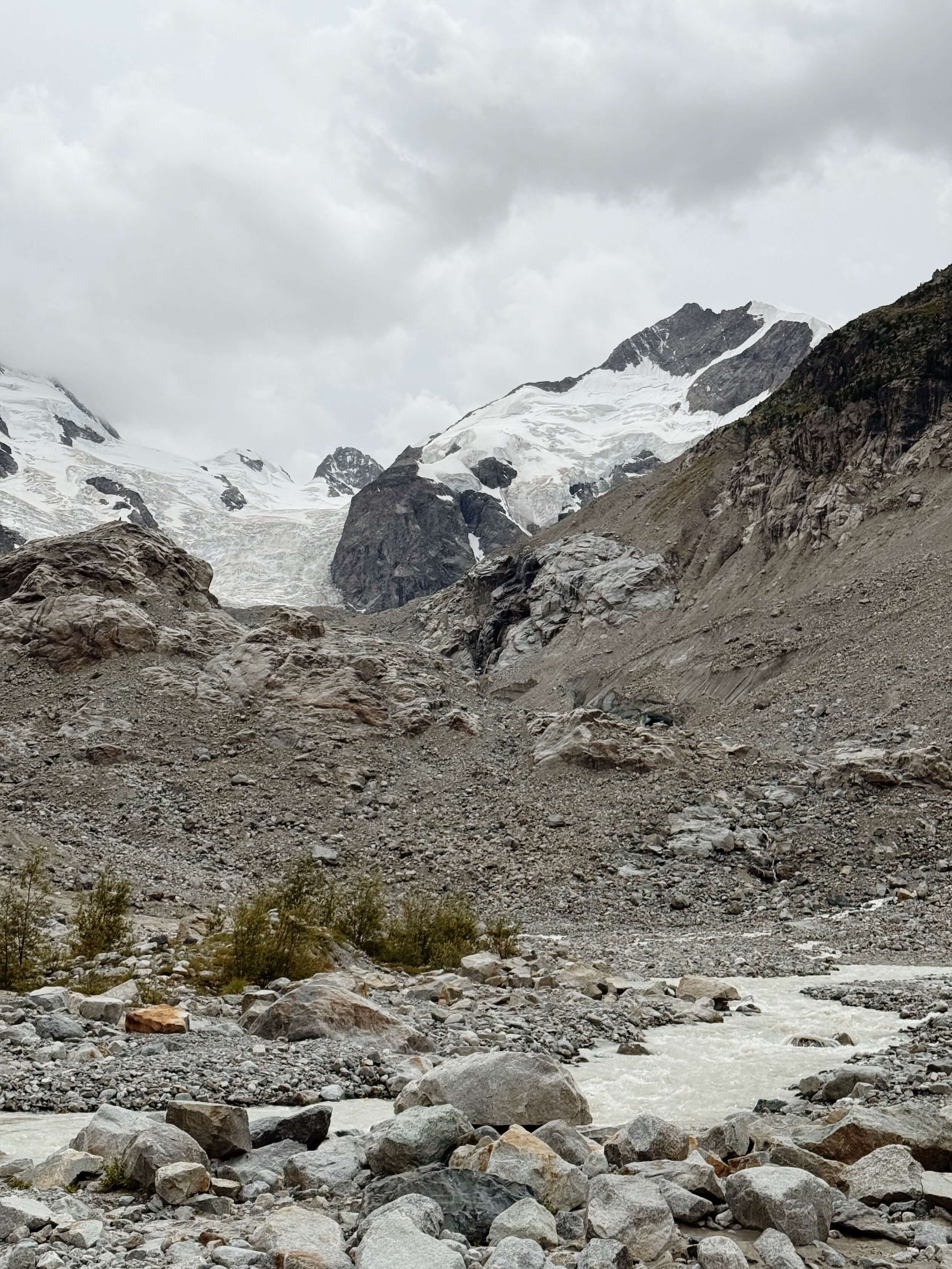
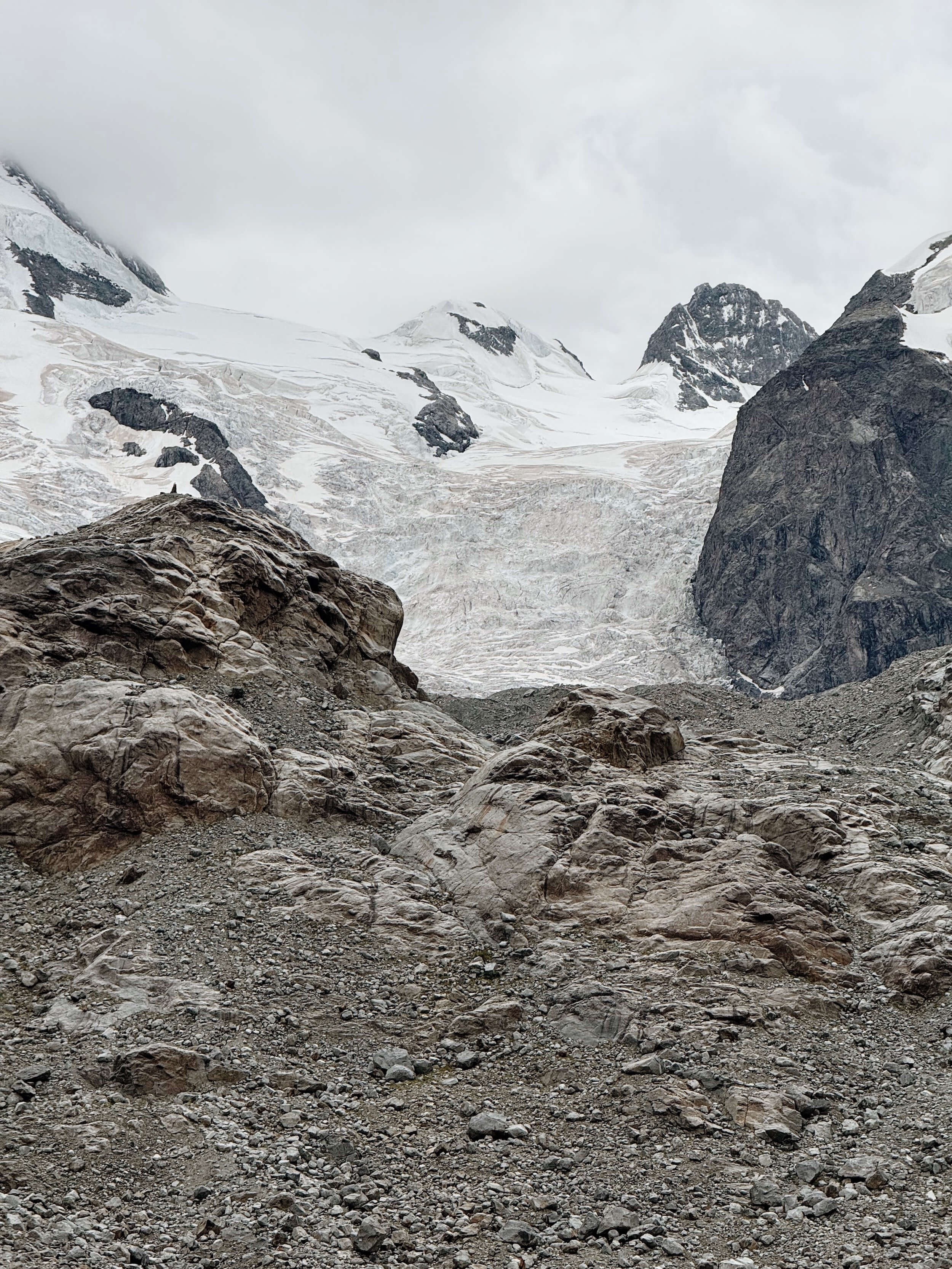
Yet with every step the glacier slips further from view. The final section has no drama and does not reveal a wall of ice, but a landscape of bare rock and rubble. The glacier has retreated behind a moraine, hidden from those who have walked all the way to its former edge.
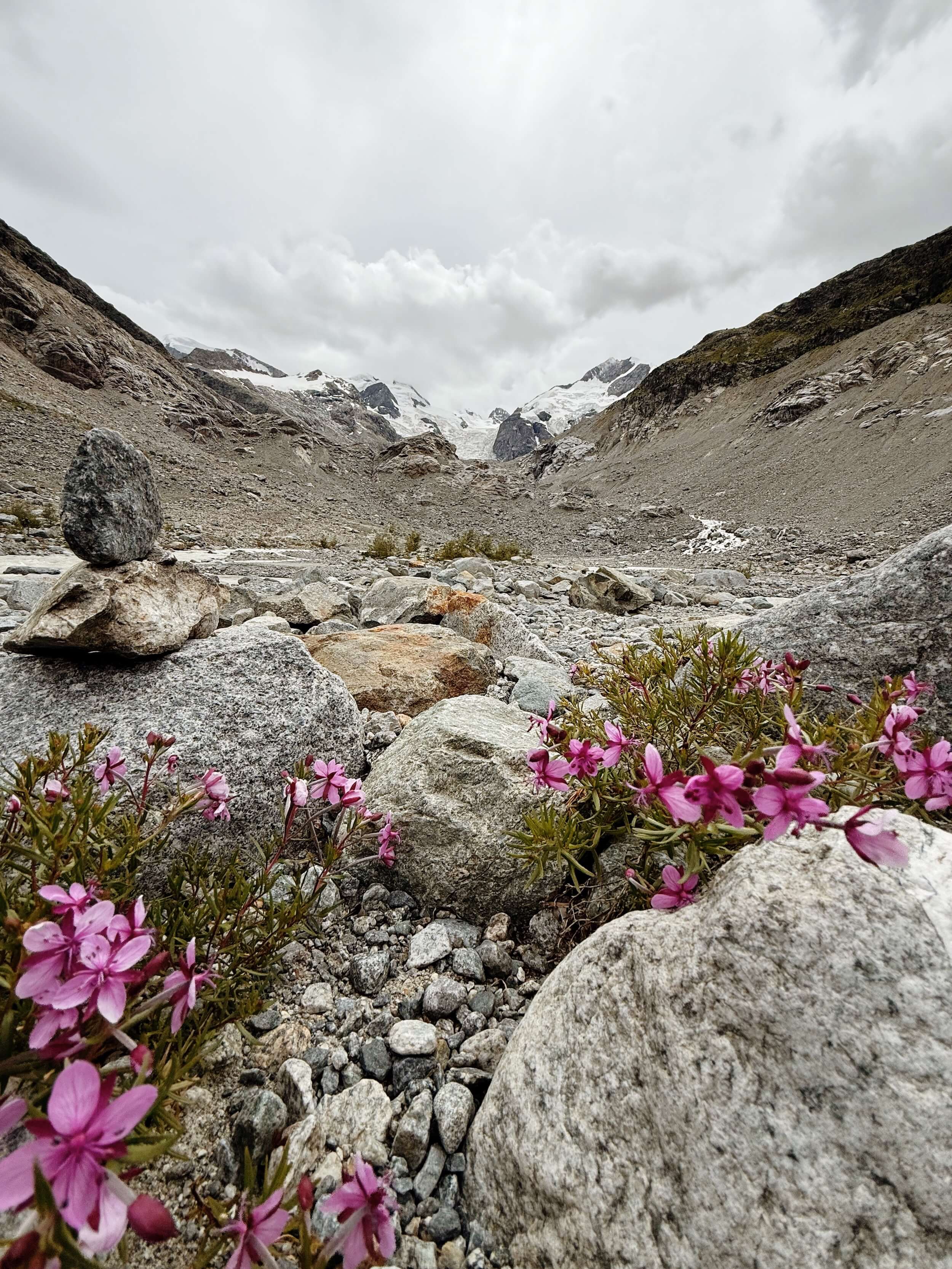
The end of the trail is strangely empty. Meltwater streams weave between boulders left behind by centuries of moving ice. Small alpine flowers have found enough soil to bloom amongst the stones, adding moments of colour to an otherwise lifeless scene. There is no dramatic terminus, no towering face of blue ice. Only evidence that it was once here.
Many visitors pause in confusion. After walking to the viewpoint, they instinctively search the valley ahead, wondering where the glacier has gone. It feels as though the destination has been removed, leaving only the journey.
The Morteratsch Glacier has retreated by more than two kilometres since the nineteenth century,1 its snout withdrawing uphill as temperatures have risen. Markers along the trail quietly record its former positions, each one a reminder of how recently the ice occupied the ground beneath your feet.
Standing at the end of the path, it is difficult not to feel a sense of loss. The glacier still exists, but it has become increasingly distant, hidden beyond the ridge of debris it created during its retreat. The river continues to flow, carrying the glacier away grain by grain, while the valley slowly adjusts to a landscape without ice, new trees appearing everywhere alongside the trail.
Morteratsch is often celebrated as one of the Alps' great glaciers. Yet today its most powerful impression is not its size, but its absence.
- Oerlemans, J., et al. (2009). Retreating alpine glaciers: increased melt rates due to accumulation of dust (Vadret da Morteratsch, Switzerland). Journal of Glaciology, 55(192), 729–736. Cambridge University Press. ↩