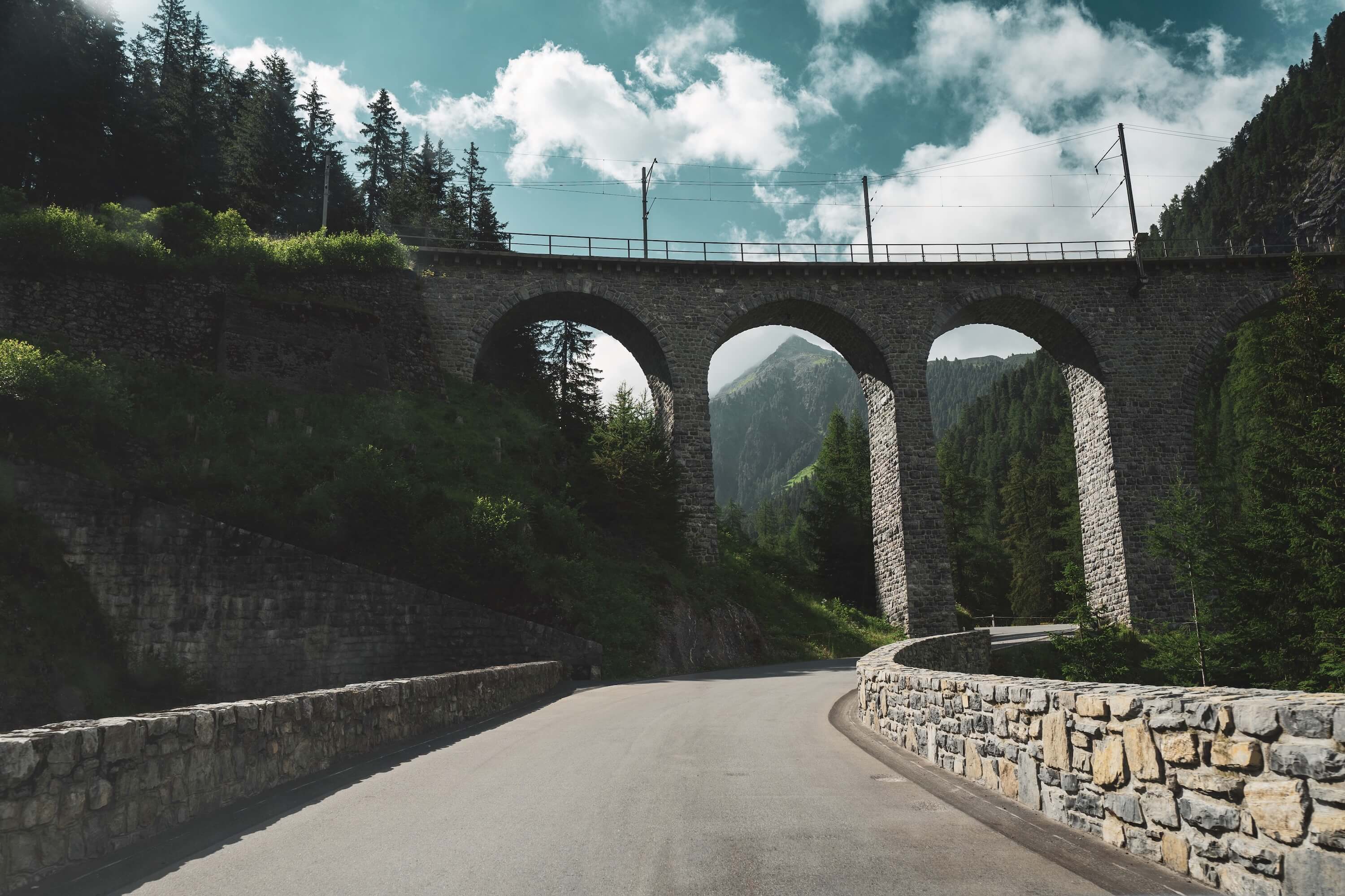
The Romans may have used this route to trade corn for beeswax but other more used routes took precedence even back then. In 1695 they used gunpowder to create a tunnel and in 1866 the road was widened to 4 metres to let horse-drawn carriages and the post coach get through. Other than tarmac, the road has seen little further development, mostly thanks to the 1903 opening of a scenic railway line - The Rhätische Bahn.
The Albula is one of the less developed of the Swiss Passes, in part it is singletrack and in Bergün it still runs on cobblestones. In winter Bergün becomes home to one of Europe's most scenic sledge runs when the pass road closes to traffic and gets taken over by schussing wooden toboggans. Bobsleds use the railway to get access to the pass road/toboggan run.
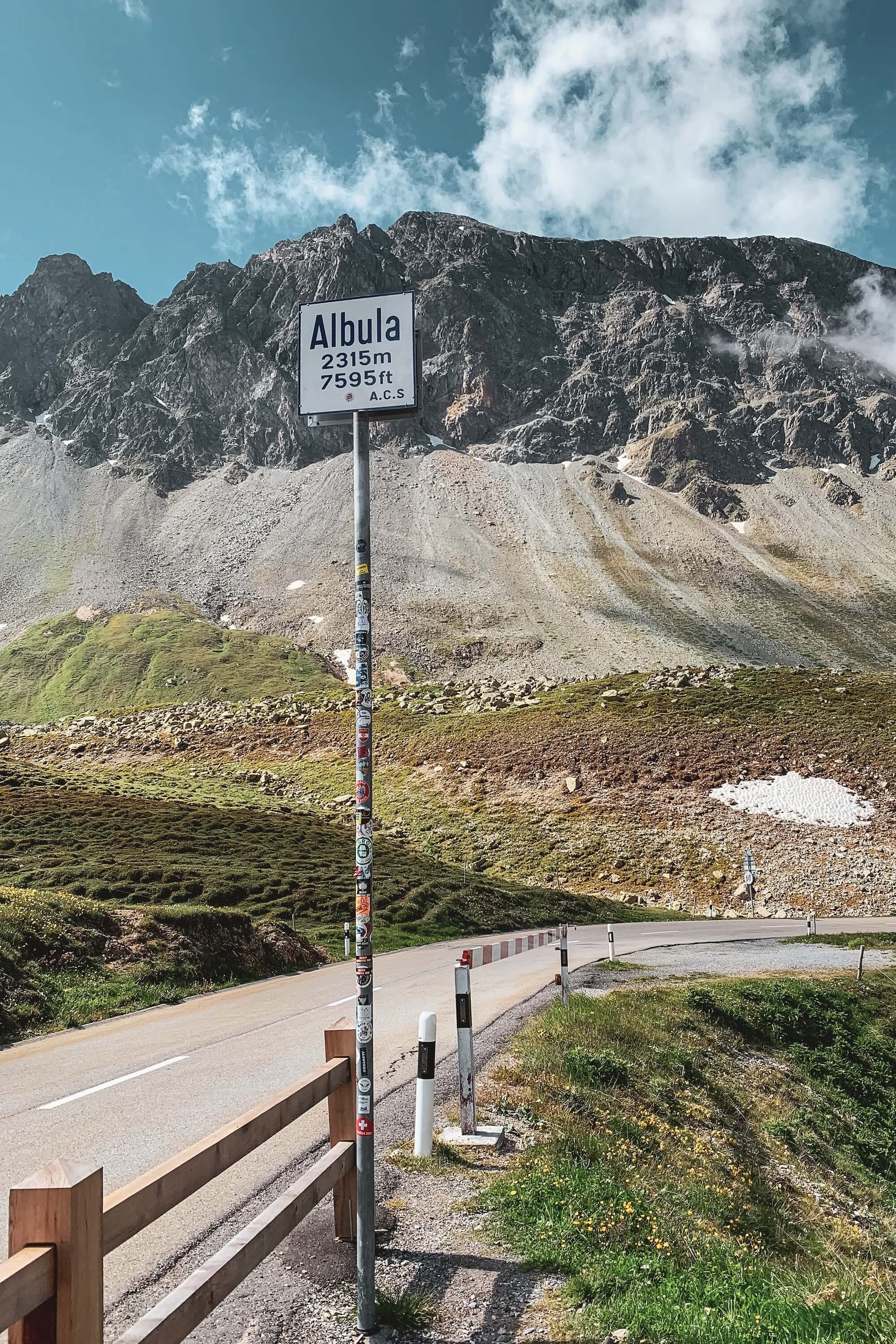
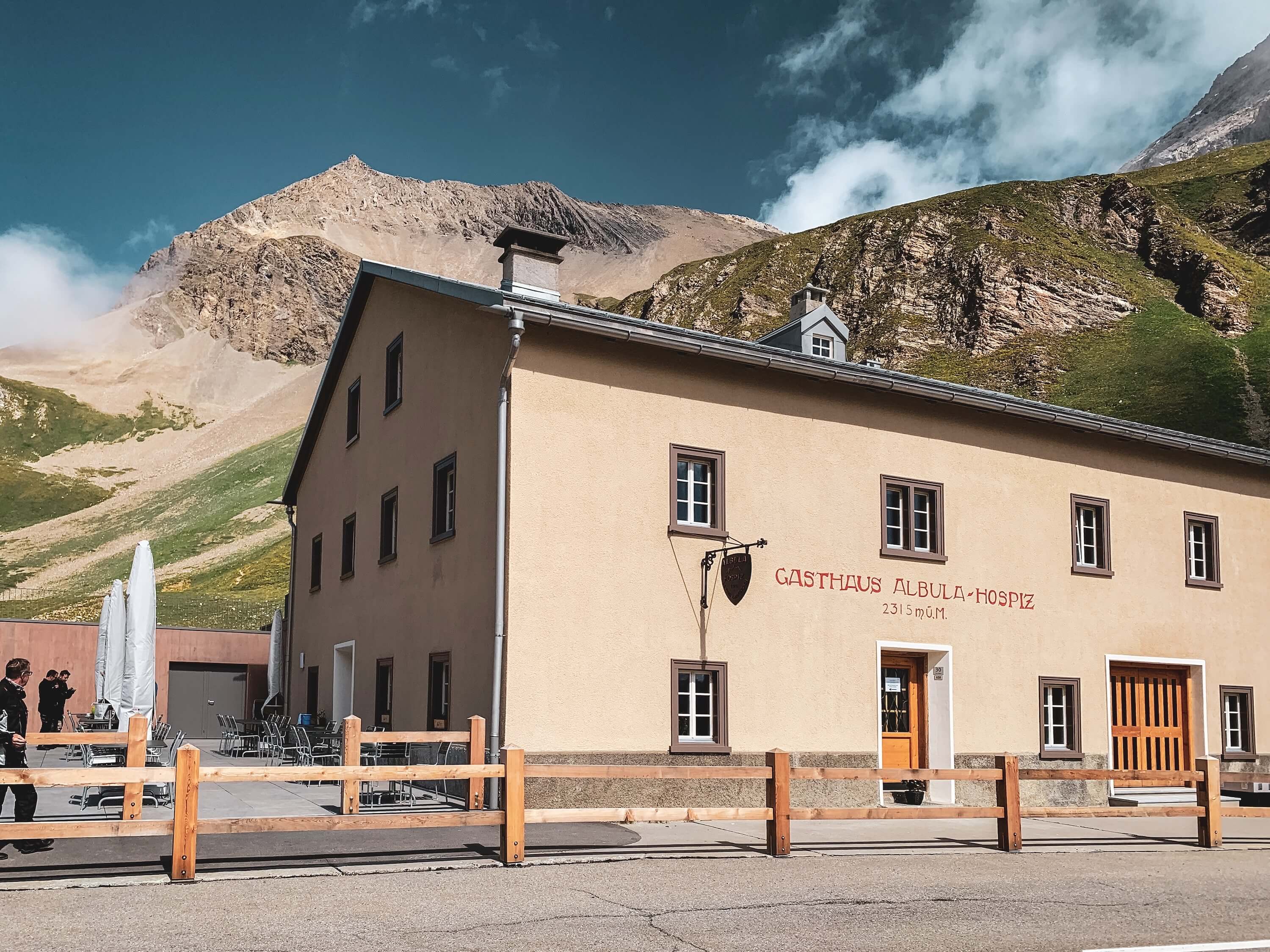
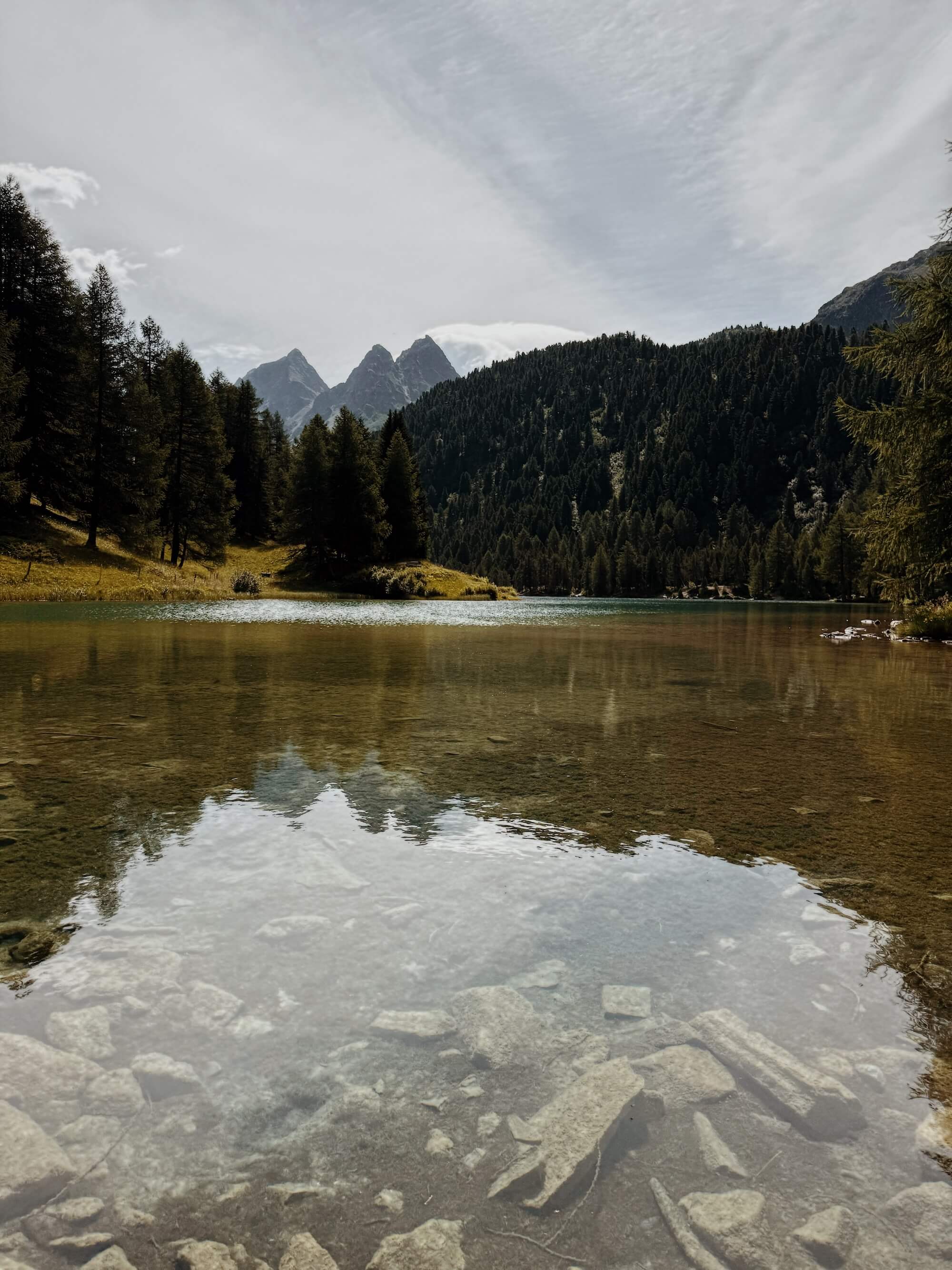
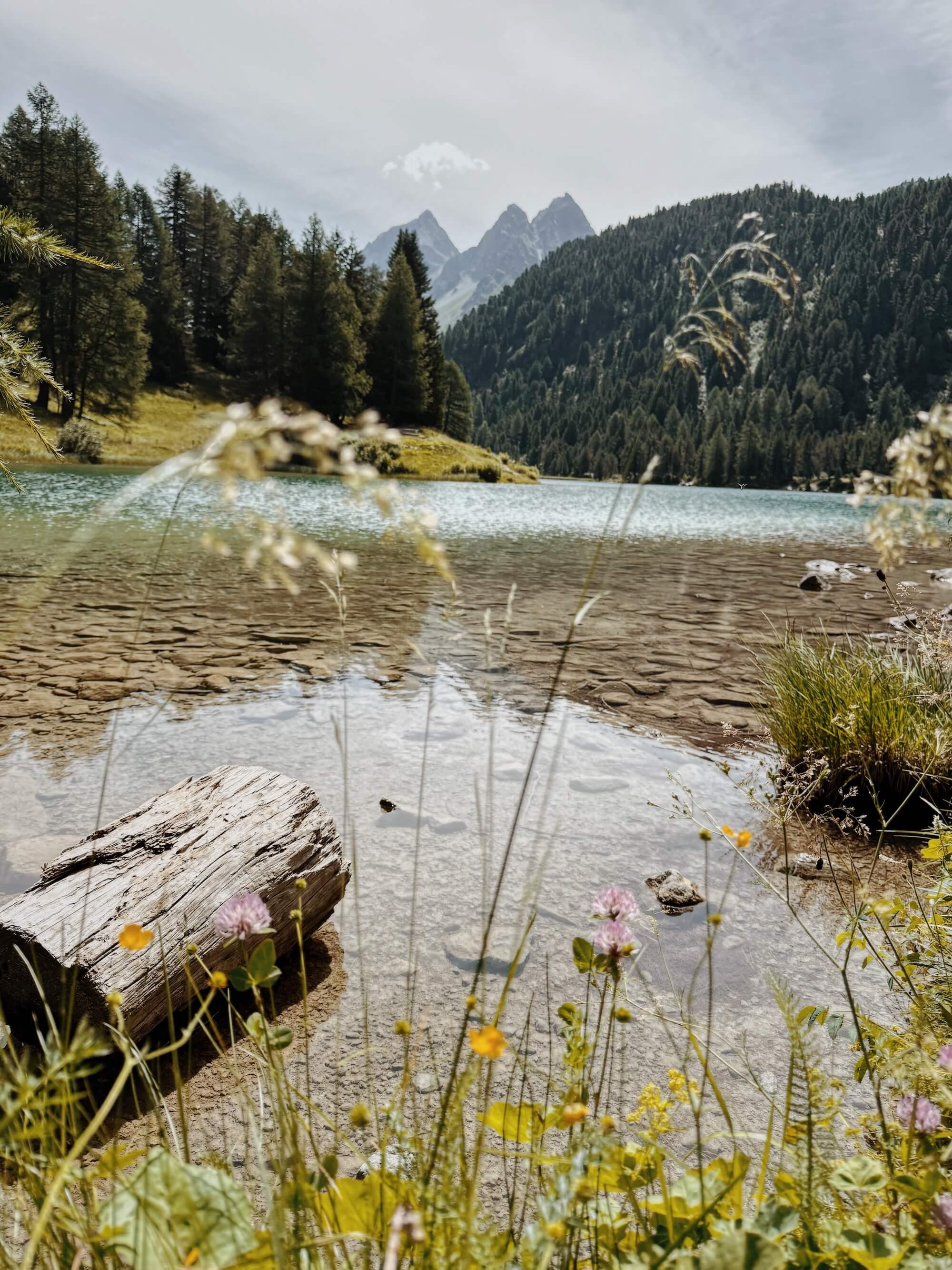
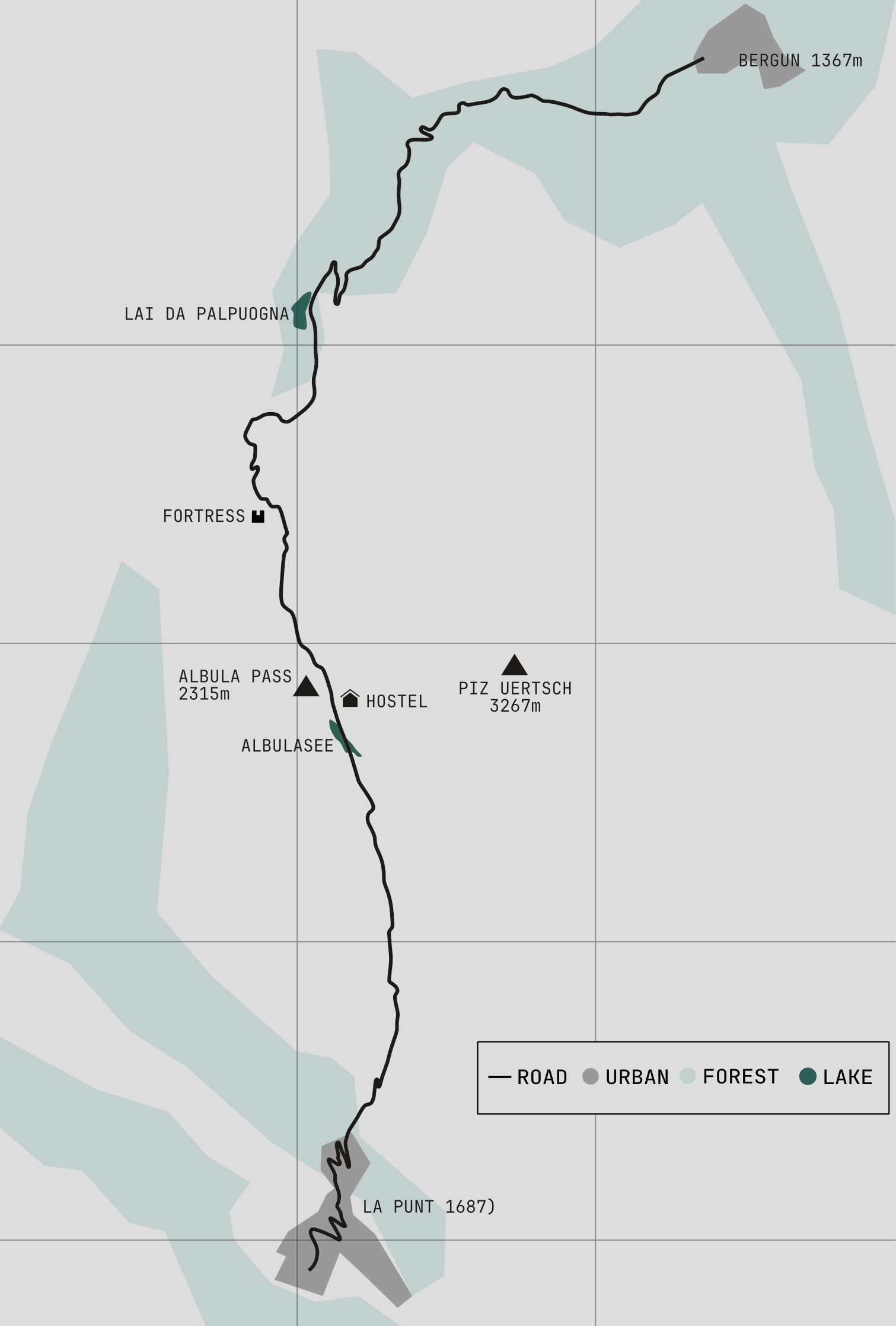
The Albula takes a slow route into the Engadin valley on a winding and narrow road that is criss crossed by the railway track in a series of descending loops. The views of the train seen from the road are on series of scenic bridges and viaducts. The quiet lake of Palpuogna makes for a beautiful stop before arriving at a false summit and a old fortress with a rock-strewn surround. The top of the pass comes at the hostel with a mountain bike trail starting on the opposite side of the road. A long straight followed by a sweeping descent takes you to the valley floor at La Punt.
Statistics
| Distance | 23 km |
|---|---|
| Summit Altitude | 2315 |
| Minimum Altitude | 1367 |
| Maximum Altitude | 2315 |
| Total Ascent | 951 |
| Total Descent | 630 |
| Opening | June to mid-October |