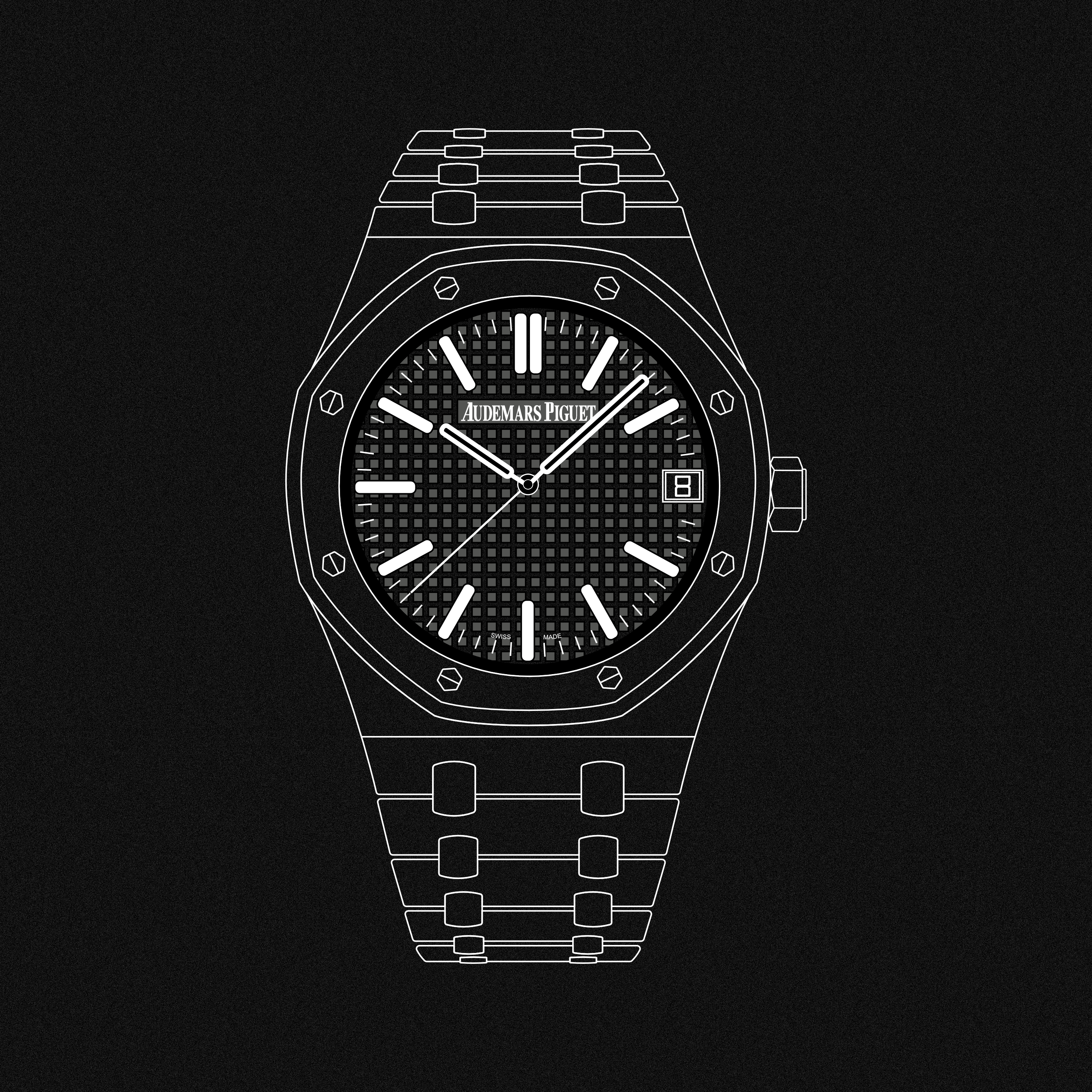
Born in the Vallée de Joux, the Royal Oak was an unlikely revolution. In 1970, Audemars Piguet asked designer Gérald Genta to create a steel sports watch unlike anything that had come before. The result combined an octagonal bezel, exposed screws, an integrated bracelet and an unusually thin mechanical movement, all in steel yet priced like a gold watch. It was unveiled at the Basel Fair on 15 April 1972.
Reception was mixed. Its size, industrial appearance and price challenged the conservative conventions of Swiss high watchmaking, with some describing it as shocking rather than beautiful. Yet the scepticism did not last. By the end of 1972, 490 had been sold, making it Audemars Piguet's most successful individual model to that point.
What began as an experiment became a new category of watch, combining the worlds of sport and haute horlogerie. Gold versions, smaller cases and new complications followed, and more than 500 Royal Oak variations have since been produced. More than five decades later, its deliberately angular silhouette remains remarkably recognisable, and the Royal Oak has become one of the defining luxury watches of the modern era.