Monaco is one of those places that somehow manages to be both exactly what you expect and not at all what you expect. The clichés are all here: superyachts, supercars, designer boutiques and enough wealth to make Dubai look almost understated. Yet beyond the postcard image is a remarkably practical little country, a place that has spent decades solving the problem of fitting a city into a cliff face. Wedged between the Mediterranean and the Maritime Alps, Monaco feels less like a nation and more like an engineering project that became a principality.
Monaco’s landscape makes it a challenging place to develop. Beyond the coastal path it’s far from flat. From the sea, you walk up through Monaco until you pass into France, not that you would notice the border, before the cliffs make further progress impossible. Monaco has made remarkable use of this tiny piece of land. To get its citizens up and down the precipitous principality, the streets are riddled with hidden lifts, stairs and escalators that are outside, not in and for the 2 and four wheels, tunnels connect many of the principality’s districts.
Monaco is never standing still. The old Ni Box complex above the Fairmont Hairpin has disappeared entirely, replaced by a new development intended to connect Monte Carlo with the Mareterra district. In a country where land is measured almost as carefully as gold, entire neighbourhoods can change surprisingly quickly.
Monaco’s 38,000 residents make it one of the most densely populated countries in the world, but only a fraction are Monégasque citizens. The rest are drawn here by the climate, the lifestyle and, perhaps most famously, the tax advantages.
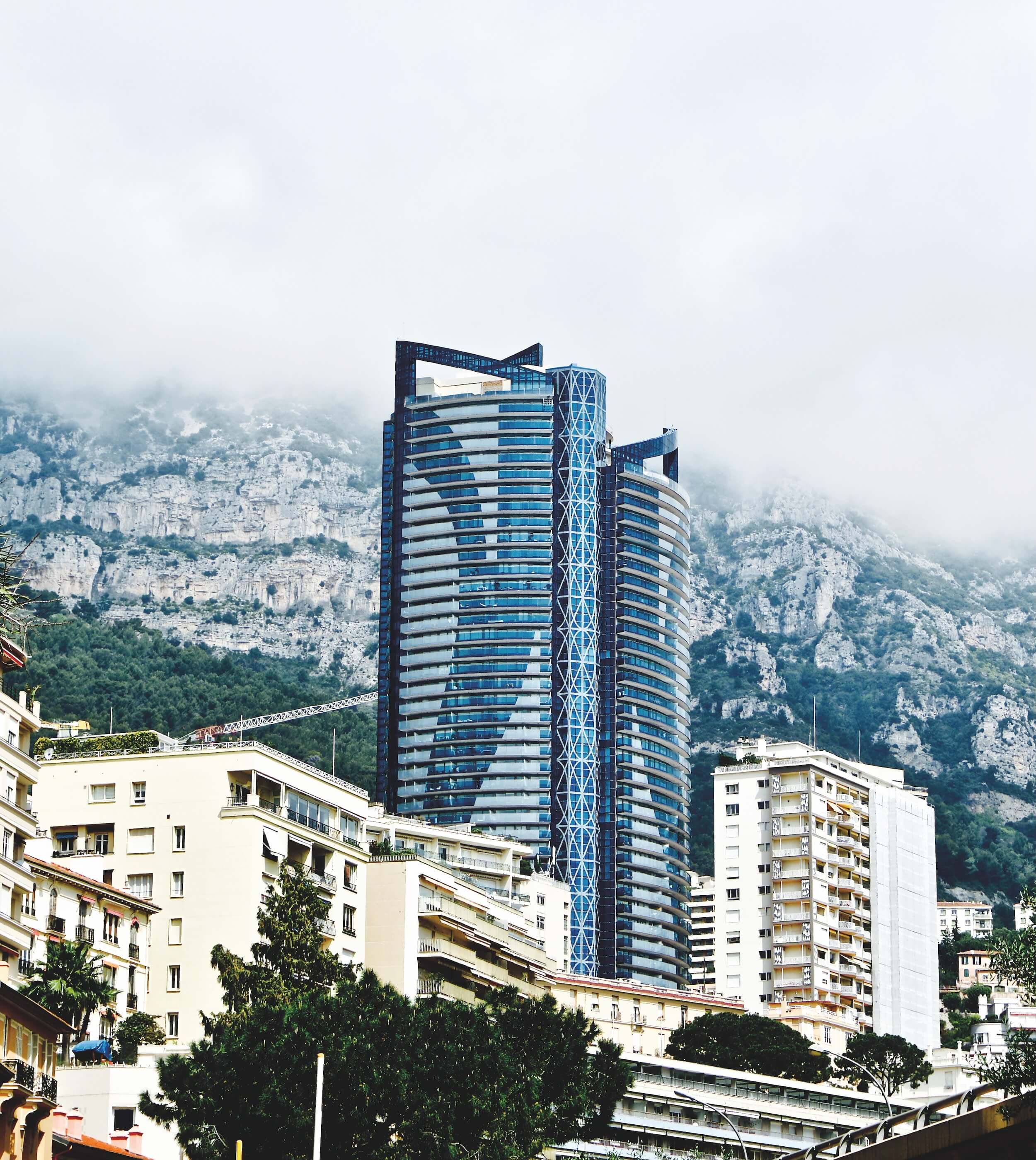
In order to enjoy those benefits they will have deposited substantial sums in a Monaco bank and rented or bought some of the most expensive property in the world. The penthouse of the Odeon Tower, a five-storey apartment complete with its own water slide, was marketed for hundreds of millions of euros. It is no surprise, then, that one in three residents is a millionaire and more than a few billionaires call the principality home.
Being home to billionaires, there are plenty of ridiculous things to see, such as the previously mentioned Odeon Tower. You cannot miss it. It is the largest tower around and it is blue. In Port Hercules, superyachts line the quays, while even larger vessels often sit at anchor offshore with guests indulging in... well, whatever it is you do on a superyacht.
All the luxury brands are here: Chanel, Dior, Louis Vuitton and the rest. Richard Mille has a boutique, and Ferrari and McLaren are represented. Which brings us to cars. Monaco is a car spotter's dream, filled with the latest supercars and impossible-to-obtain Porsches. It is also a very bad place to own a supercar. There are only a handful of routes into and out of Monaco by road, and most are congested much of the time. The roads themselves are a maze of tight turns, tunnels and steep ascents, while the underground car parks seem specifically designed to test the patience of owners of low-slung machinery.
On the surface Monaco is a noisy, busy place, but you can still find solitude and even a little peace. It has several notable green spaces. The Japanese Garden offers tranquil ponds and sea views, the Jardin Exotique looks down over the principality from high above, and the Jardin Saint-Martin wraps around Le Rocher beneath the Oceanographic Museum. There are many smaller parks hidden in the residential districts above Larvotto, where it is noticeably quieter, perhaps because the millionaires are elsewhere.
Le Rocher, or The Rock, is also home to the Prince's Palace, where the current Prince of Monaco resides and where you will find some of Monaco's most impressive architecture. The House of Grimaldi traces its rule back to 1297, when Francesco Grimaldi seized the fortress of Monaco. More than seven centuries later, his descendants remain on the throne.
Monaco is a microcosm of most large cities. It takes all the ingredients, wealth, congestion, glamour, commerce, history and compresses them into barely 2 km2. It is the espresso of countries. If you are more of a latte person, it may not be for you.