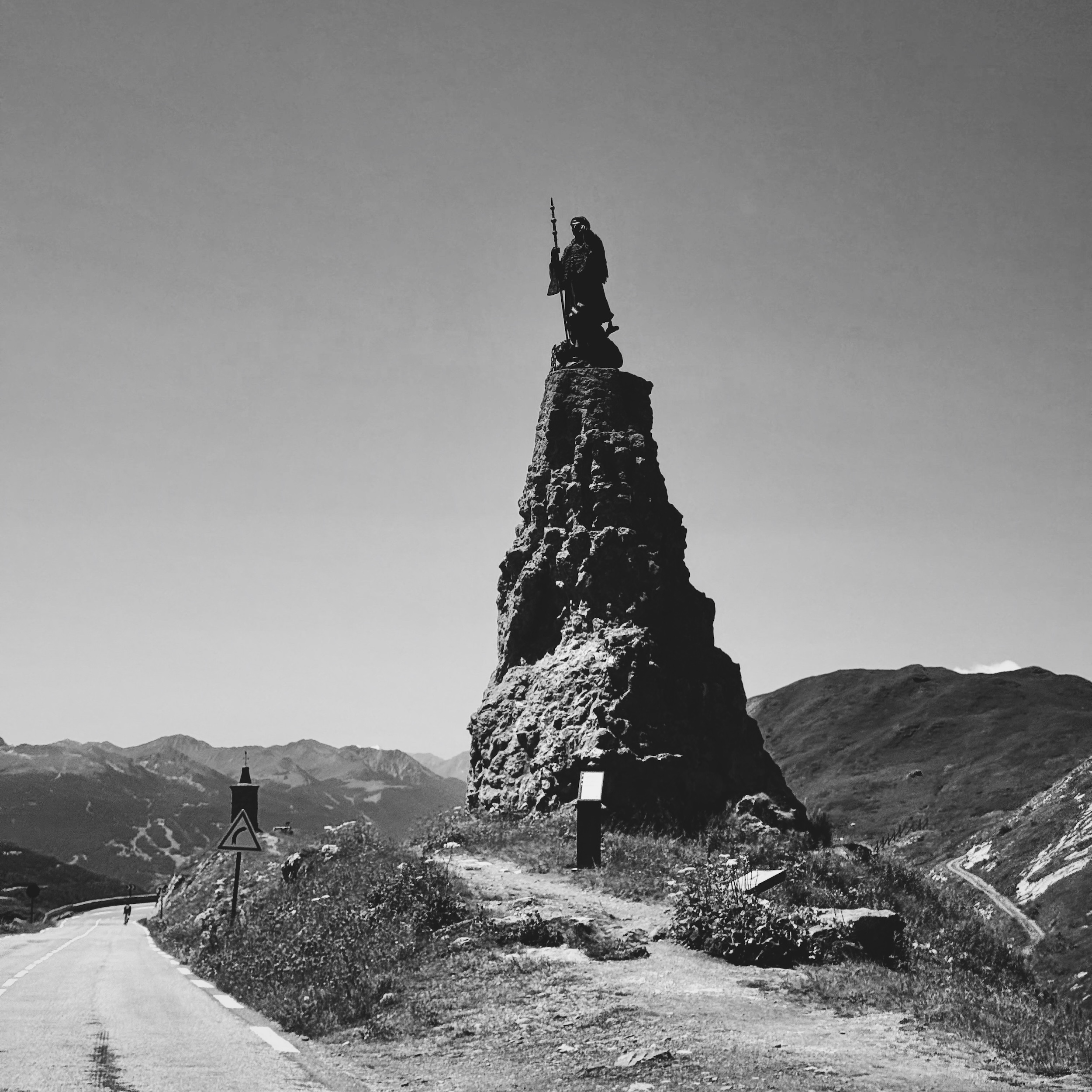
Before roads, tunnels and mountain rescue services transformed the Alps, crossing the high passes was a dangerous undertaking. Snowstorms, avalanches, rockfalls and bandits made journeys across the mountains unpredictable, and travellers often depended on local knowledge and shelter to survive. One man became closely associated with making these crossings safer: Bernard of Menthon.
Born around 1020 in the Kingdom of Burgundy, Bernard was an eleventh century archdeacon and missionary who devoted much of his life to helping travellers navigate the Alpine passes. Around 1050, he established a hospice at the summit of the Great St Bernard Pass, providing food, shelter and refuge for those crossing between the Aosta Valley in Italy and the Rhône Valley in Switzerland.
The location was carefully chosen. At 2,469 metres, the Great St Bernard Pass was one of the highest and most important routes through the Alps, but it was also one of the most exposed. The hospice became a vital sanctuary for pilgrims, merchants, soldiers and local travellers caught in severe weather. For almost a thousand years, the Augustinian canons have continued this tradition of hospitality, welcoming those who arrive at the summit.
Bernard later established another hospice on the Little St Bernard Pass, another historic crossing between France and Italy. Unlike the Great St Bernard, which connects Switzerland and Italy, the Little St Bernard links the Tarentaise Valley in France with the Aosta Valley. The pass was an important route through the western Alps and may have been used since Roman times, with evidence of ancient settlements and a Roman road found near the summit.
The two passes that bear Bernard’s name became symbols of Alpine hospitality. Although the famous Saint Bernard dog breed was developed later at the Great St Bernard Hospice, the name comes from the mountain refuge founded by Bernard himself. The dogs became renowned for their ability to assist travellers lost in winter conditions, although the familiar image of a rescue dog carrying a small barrel of brandy is a later invention rather than historical fact.
Bernard was revered locally for centuries before being formally canonised in 1681 by Pope Innocent XI. In 1923, Pope Pius XI declared him the patron saint of mountaineers and Alpine travellers, recognising the enduring connection between his work and those who journey through the mountains.
Today, the Great St Bernard and Little St Bernard Passes remain reminders that Alpine travel has always been about more than roads and routes. Long before the arrival of cars and modern engineering, these crossings depended on human kindness, local knowledge and a willingness to help strangers in one of Europe's most demanding environments.